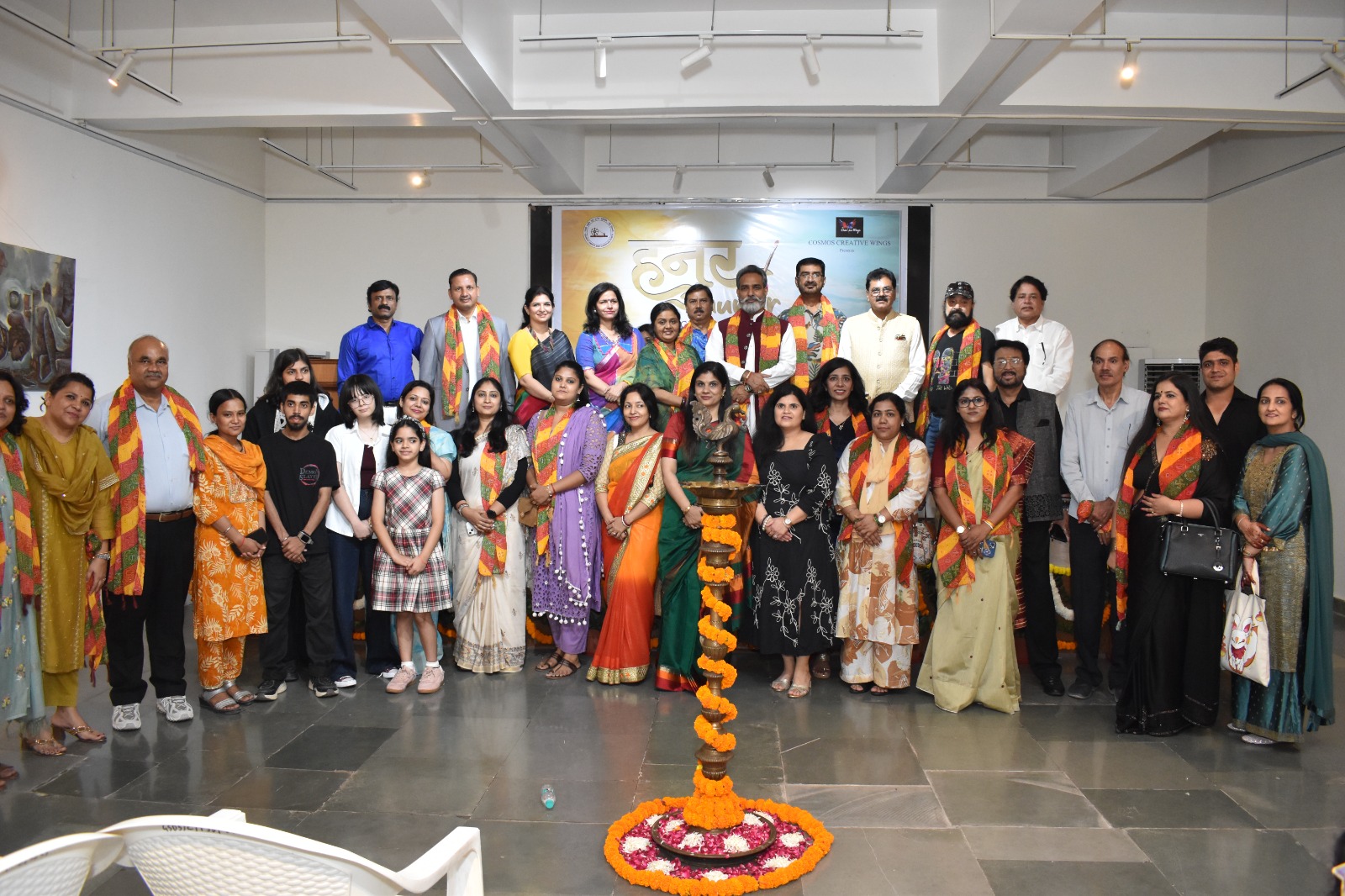
DILIP GUHA, New Delhi: HUNAR 2026, a six-day group art exhibition presented by Cosmos Creative Wings, concluded last Sunday. The exhibition was inaugurated by Dr Sanjeet Kumar, Director, Gandhi Smriti and Darshan Samiti (GSDS), on October 27 at the Gandhi Darshan Art Gallery, Rajghat. Curated by Purnima Arora and Rajesh Kumar Dedha, the exhibition celebrated artistic excellence, imagination and the transformative power of creativity. Shri Rajesh Nagar, Hon’ble Minister of State (Independent Charge) for Food, Civil Supplies and Consumer Affairs, and Printing and Stationery, Government of Haryana, also visited the exhibition during his visit to Gandhi Darshan.
A significant highlight of HUNAR 2026 was its celebration of artistic talent that transcends physical limitations. The exhibition introduced an extraordinary artist who creates paintings using his feet, demonstrating how physical disability need not restrict imagination, determination or creative expression. Through patience, discipline and perseverance, the artist has developed a distinctive painting technique, transforming each stroke into an expression of courage, resilience and artistic freedom. The artist’s journey reminded visitors that creativity finds its own way when passion and determination come together.
Speaking about the vision behind HUNAR 2026, Purnima said, “HUNAR is more than an exhibition of paintings; it is a celebration of the human spirit and the extraordinary possibilities of artistic expression. Every artwork tells a story of passion, patience, discipline and imagination. We aim to provide artists with a platform to share their creativity, inspire audiences and demonstrate that art knows no boundaries. The participation of an artist who paints with their feet makes this message especially meaningful, reminding us that determination and talent can overcome barriers and open new avenues of expression.”
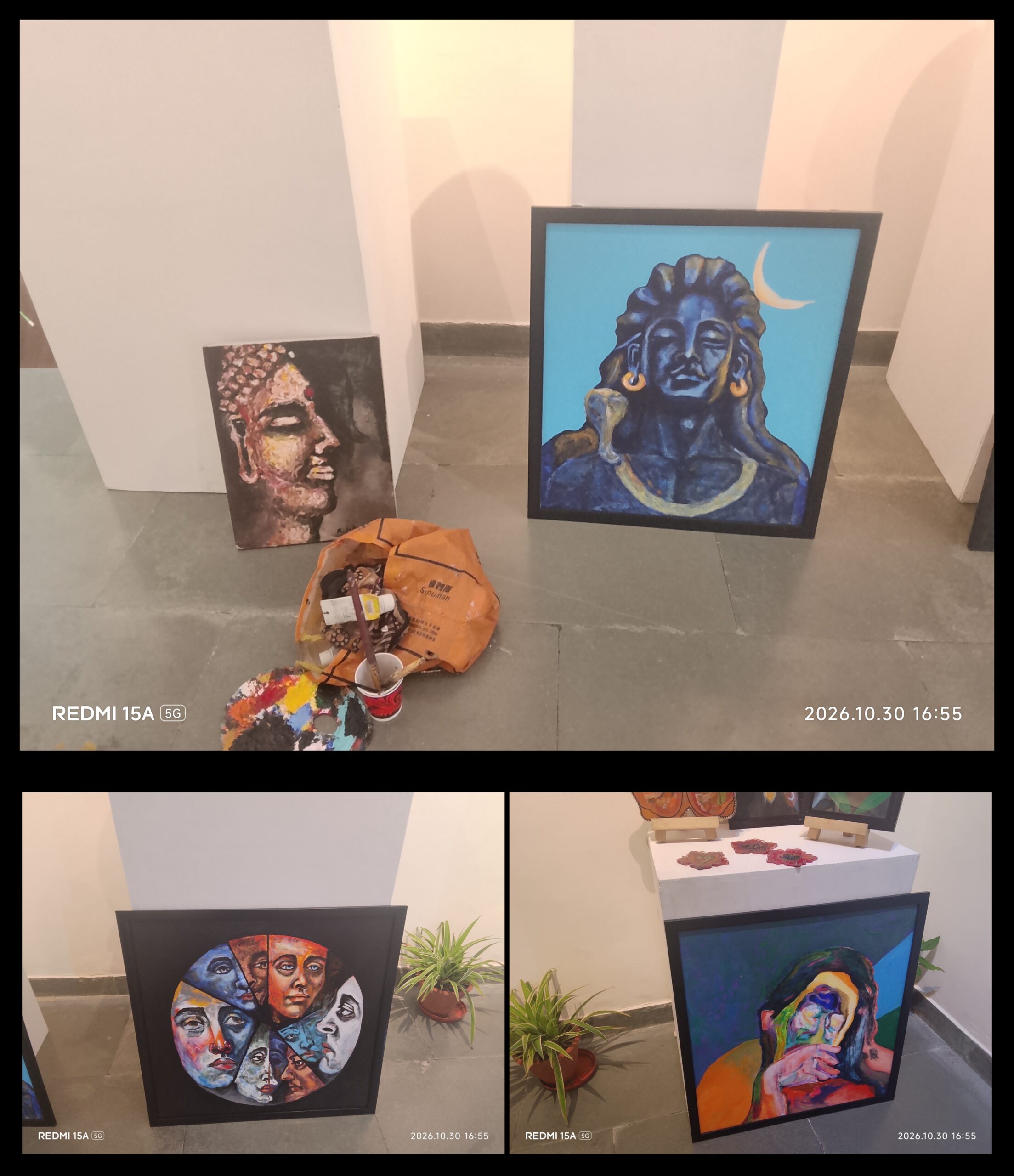
The exhibition brought together paintings that went beyond visual beauty to communicate stories, evoke emotions and encourage reflection. Each artwork represented an individual artistic journey, revealing the artists’ approaches to colour, form, texture and technique. The diversity of creative expressions offered visitors an opportunity to appreciate not only the finished works but also the dedication and imagination behind them.
The programme extended beyond the gallery displays, incorporating workshops and interactive activities designed to encourage learning and participation. On October 27, the inauguration was accompanied by a waste-material art workshop conducted by Shri Udit Narayan. On October 28, a children’s art competition was held, followed by a calligraphy workshop for artists conducted by Shri Ramesh.
After a break on October 29, the programme was scheduled to resume on October 30 with a workshop on the science behind art materials by Mr Kamal Seth from Camel. An art camp for artists was held alongside an art workshop conducted by Shri Praveen Saini. The art camp was to continue on October 31, with the HUNAR Kavi Sammelan held, bringing poetry and visual art together in a celebration of imagination and expression. The exhibition’s closing ceremony included prize distributions.
Through its combination of artworks, hands-on workshops, children’s activities and literary engagement, HUNAR 2026 sought to foster a wider appreciation of the arts and create opportunities for artists and audiences to connect. Its emphasis on inclusive creativity and individual artistic journeys reinforced the idea that art is not merely about technique or aesthetics, but also about communicating experiences, inspiring reflection and building human connections.
The exhibition ran from October 27 to November 1, 2026, at the Gandhi Darshan Art Gallery, Rajghat. HUNAR 2026 offered a platform for artists to share their talent and for visitors to discover the many forms through which creativity finds expression.
Also Read : National-Level Art Exhibition “We Are 17” Opens at India Habitat Centre
World Record Holder Rajesh Kumar Dedha Showcases Art from Waste at HUNAR 2026
A special attraction at HUNAR 2026 was the creative display of artworks made from waste materials by world record holder artist Rajesh Kumar Dedha, who is also one of the organisers and curators of the exhibition. Through his innovative creations, Dedha demonstrated how discarded materials could be transformed into meaningful works of art, giving a new dimension to the concept of sustainability and creative reuse.
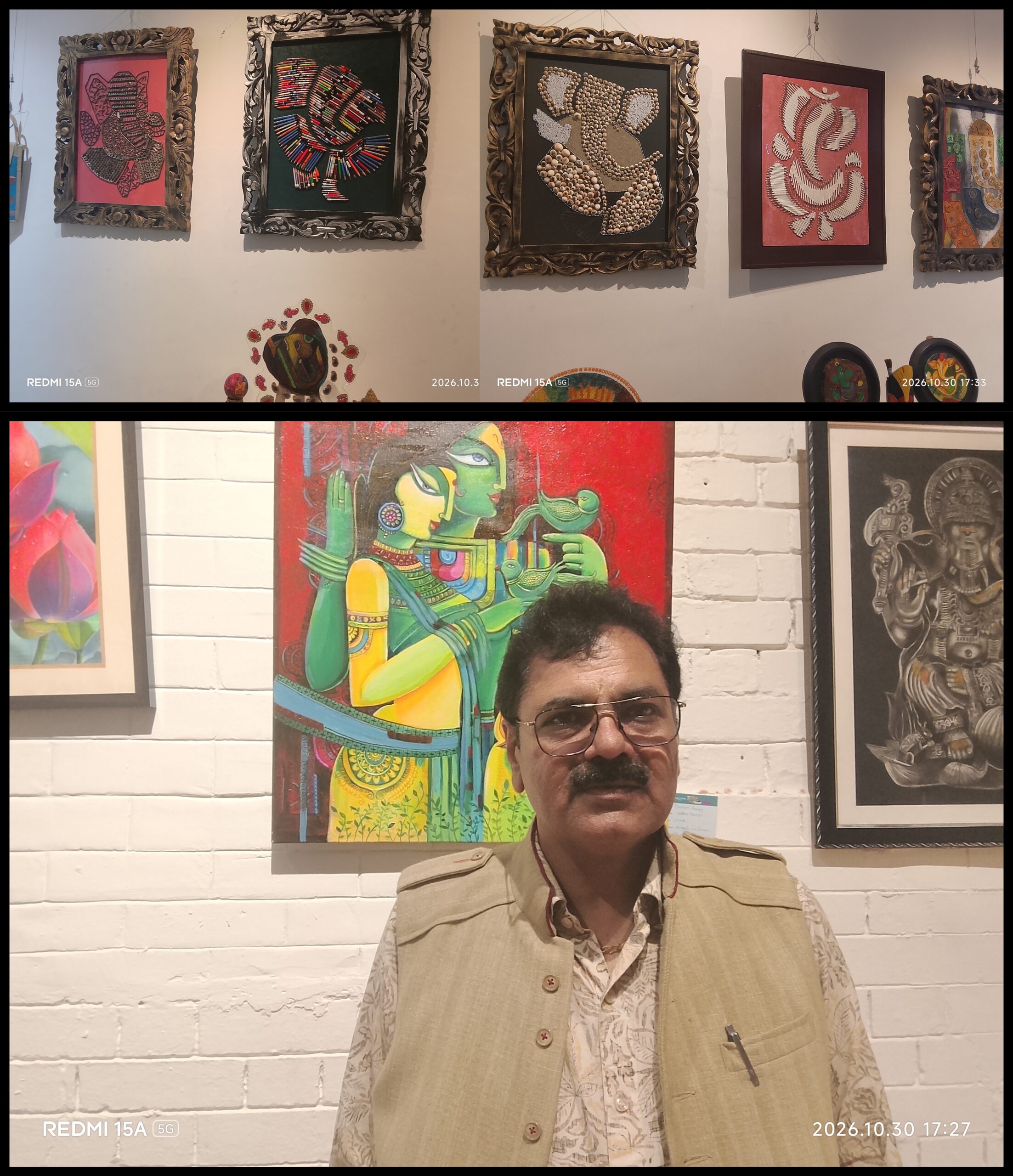
Speaking about his artistic journey, Dedha said, “I have been working with waste materials and creating art since 1981. Over the years, we have organised art exhibitions in 29 countries abroad and across several states in India. I have endeavoured to explore the creative possibilities of discarded materials and demonstrate how waste can be transformed into artistic expressions.”
Highlighting the scale and participation at HUNAR 2026, he said, “The exhibition at Gandhi Darshan, Rajghat, has brought together more than 60 artists from different states of the country, showcasing a diverse range of artworks under one roof. I am happy that visitors have appreciated the artworks, and several creations have also been sold during the exhibition. This provides encouragement and recognition to participating artists. I extend my best wishes to all the artists whose works are being displayed and appreciated here.”
The exhibition has also attracted interest from professional buyers and potential collaborators, adding a commercial dimension to the platform while providing artists an opportunity to showcase their talent and connect with a wider audience.
Prerna Verma’s Art Explores Emotions, Spirituality and the Quiet Beauty of Life
The art exhibitions brought together diverse creative expressions, offering visitors an opportunity to engage with contemporary art, explore different artistic perspectives and appreciate the personal stories behind the artworks. Among the participating artists, Gurugram-based visual artist Prerna Verma presented an approach rooted in emotion, spirituality, nature, and the subtle beauty of everyday life.
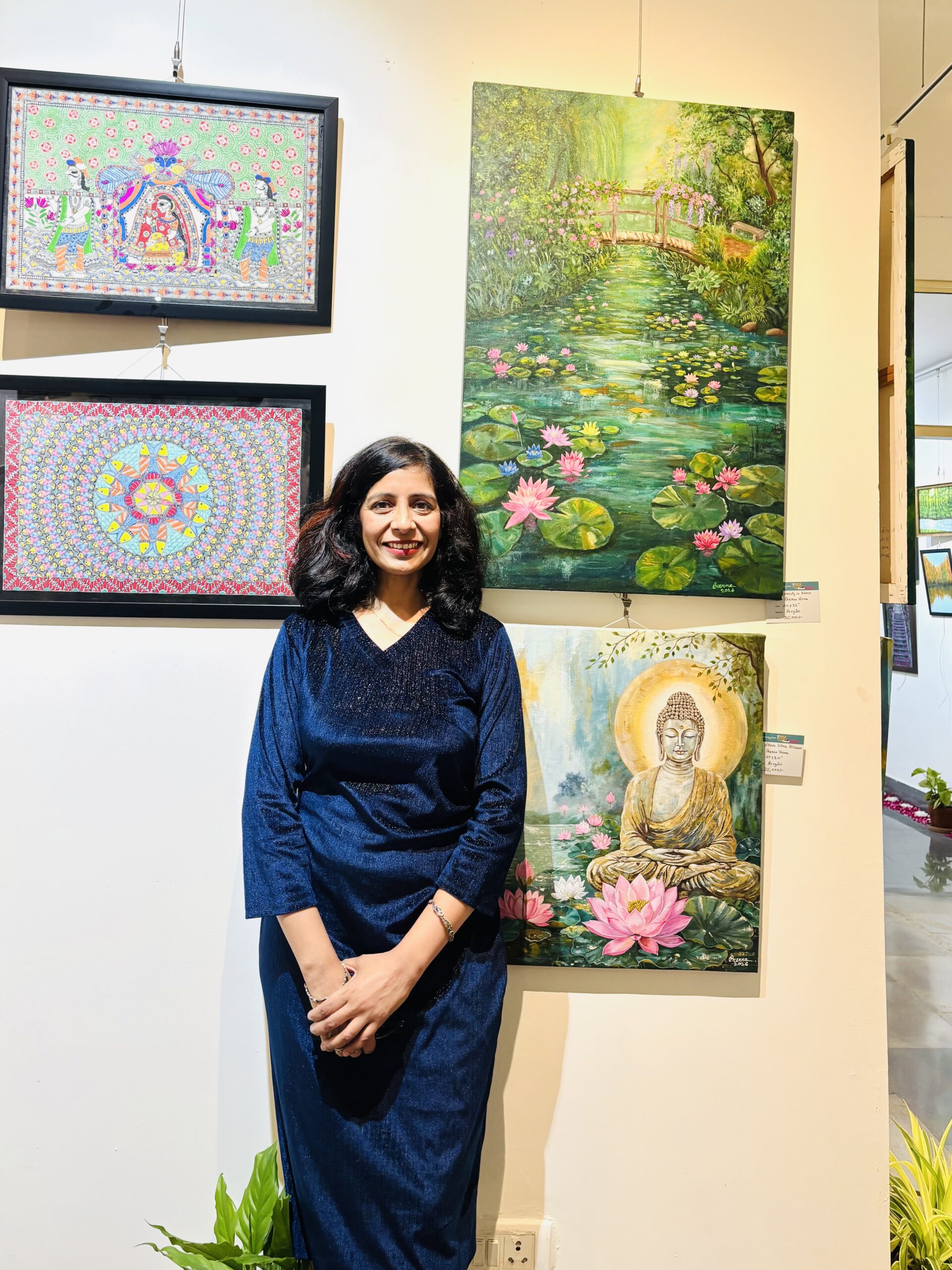
An MBA graduate who chose to follow her creative calling, Verma has developed a distinctive artistic language that translates her observations, emotions and inner reflections into expressive visual narratives. Working primarily with acrylics, watercolours and oils, she experiments with colour, texture, form and movement to create works that invite viewers to pause, reflect and interpret the images through their own experiences.
Her artistic practice moves between contemporary expression and traditional influences, exploring themes of serenity, self-discovery, harmony and the spiritual dimensions of human existence. Rather than merely depicting subjects, her works seek to communicate moods and emotions, establishing a connection between the artist’s inner world and the viewer’s personal perceptions.
Prerna Verma’s paintings added a contemplative and spiritual dimension to the exhibition. Her first artwork, Where Silence Blossoms, depicted Lord Buddha in deep meditation amid a serene lotus pond, with a radiant golden halo symbolising enlightenment, wisdom and inner tranquillity. Her second painting, Serenity in Bloom, captured the harmony of water, flowers and greenery, conveying a gentle reminder to pause, breathe and appreciate life’s simple blessings. Her third work, Whisper of the Lotus, explored themes of peace, purity, harmony and renewal, with lotus flowers symbolising spiritual awakening and a swan representing grace, tranquillity and inner peace. Her fourth painting, Divine Buddha, further reflected her spiritual artistic expression.
For Verma, art extends beyond visual aesthetics to become a medium of communication that transcends words. Each creation reflects an intimate engagement with feelings, experiences and the relationship between the individual and the surrounding world. Through her use of colours and textures, she seeks to evoke a sense of stillness and encourage viewers to discover their own meanings within the artwork.
Speaking about her artistic journey, Prerna Verma said, “For me, art is a language of the soul—a way of expressing emotions and experiences that words often cannot convey. Through my work, I try to explore spirituality, nature and the quieter aspects of life, creating artworks that encourage people to pause, connect with their feelings and discover their own interpretations.”
Her participation in the exhibitions reflected the growing space for individual artistic voices within the contemporary art landscape. By combining personal introspection with expressive techniques, Verma seeks to create meaningful encounters between art and its audience, leaving room for contemplation, emotional connection and individual discovery.
The exhibitions also underscored how artists from varied professional and creative backgrounds are finding their own ways to communicate through visual expression, enriching the cultural experience of visitors and fostering a deeper appreciation of art.
From Divine Love to Devotion: Jharna Pandit’s Artistic Expression at HUNAR 2026
HUNAR 2026 gave artists a platform to showcase their creativity and artistic interpretations of India’s rich cultural and spiritual traditions. Among the participating artists, Delhi-based visual artist Jharna Pandit presented her solo-themed artworks, Prakriti Anurag, bringing together nature, devotion and the timeless symbolism of the history of Hinduism through expressive paintings and intricate detailing.
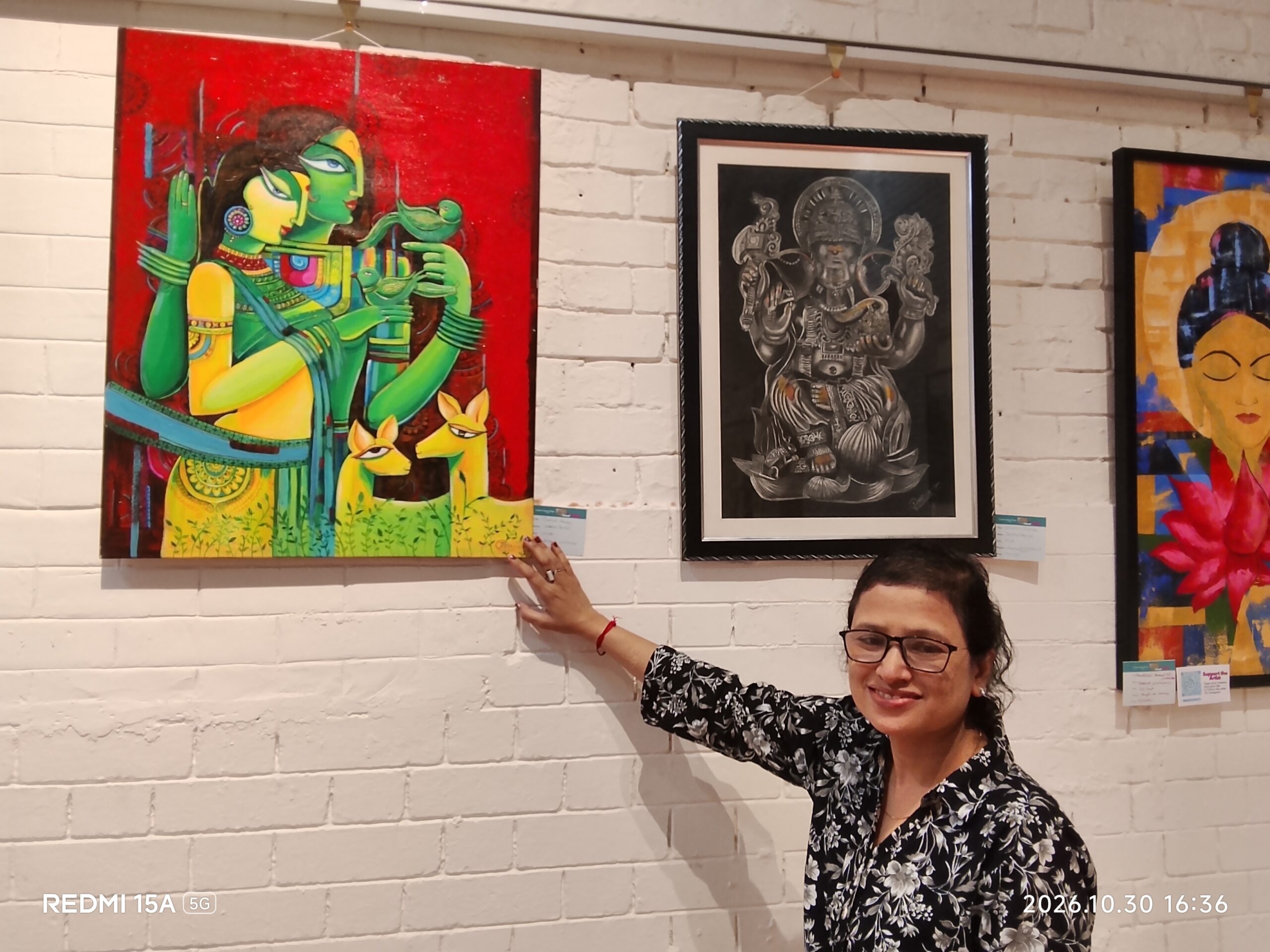
Largely self-taught, Pandit’s artistic journey began in Class 11, when she opted for Fine Arts. However, her professional career initially took her into the textiles and export industry, where she worked until 2016. The experience enriched her understanding of colours, patterns and textures, elements that later became integral to her artistic practice. In 2020, she decided to pursue her passion and embarked on a journey as an independent artist, refining her skills through self-practice, online learning and guidance from mentors, including Shaji Nangyarthodi Subramannian.
Also Read: Delhi Tourism Brings Heritage, Gastronomy & Innovation to the Forefront at BLTM 2026
Her exhibition at HUNAR 2026 featured two distinctive works, Eternal Companionship (Radha-Krishna)and Aloukik Ganesha, each reflecting a different dimension of her artistic and spiritual sensibility.
Painted in acrylic on canvas, Eternal Companionship (Radha-Krishna) portrays the divine couple immersed in nature. The striking red background symbolises passion and Shakti, while the two birds and two deer represent free spirits and harmony with the natural world. The composition reflects the central philosophy of Prakriti Anurag—an intimate connection between love, divinity and nature.
In contrast, Aloukik Ganesha, rendered in charcoal on white paper, showcases Pandit’s attention to detail and command of shading. Depicting Lord Ganesha seated on a lotus throne, the work creates a sculptural effect through layered charcoal strokes. The intricate ornaments highlight the precision of her technique, while subtle saffron accents introduce a sense of divine light into the monochromatic composition. The resulting image conveys both spiritual strength and serenity.
Explaining the philosophy behind her exhibition, Jharna Pandit said, “Prakriti Anurag—for me, art is not about creating something new. It is about remembering that we are all a part of nature. My Radha-Krishna is my heart, and my Aloukik Ganesha is my prayer.”
Through these works, Pandit brought together two complementary expressions of her artistic identity: the emotional warmth of divine love and the meditative quality of spiritual devotion. While Eternal Companionship (Radha-Krishna) explores the relationship between love and the natural world, Aloukik Ganesha reflects her reverence for the divine through meticulous craftsmanship.
Her participation in HUNAR 2026 marked another step in her evolving journey as an independent artist, allowing her to share a deeply personal vision with a wider audience. With Prakriti Anurag, Pandit invited visitors to look beyond the visual appeal of a painting and reflect on the enduring relationship between humanity, nature and spirituality.
Also Read : From Silent Era to Modern Times: IFFD Exhibition Celebrates Indian Cinema
Gunjan Verma: Art, Spirituality and Nature
Gunjan Verma, an artist and teacher based in Shahdara, Delhi, brought together spirituality, Indian cultural heritage and environmental awareness through her paintings at HUNAR 2026. A graduate in Drawing from Chaudhary Charan Singh University, she further pursued IGD Bombay from Khatauli, followed by B.Ed. and an M.A. in Hindi. Her creative journey was also enriched by short-term courses in fashion designing, terracotta and pot decoration, reflecting her interest in exploring different artistic mediums and techniques.
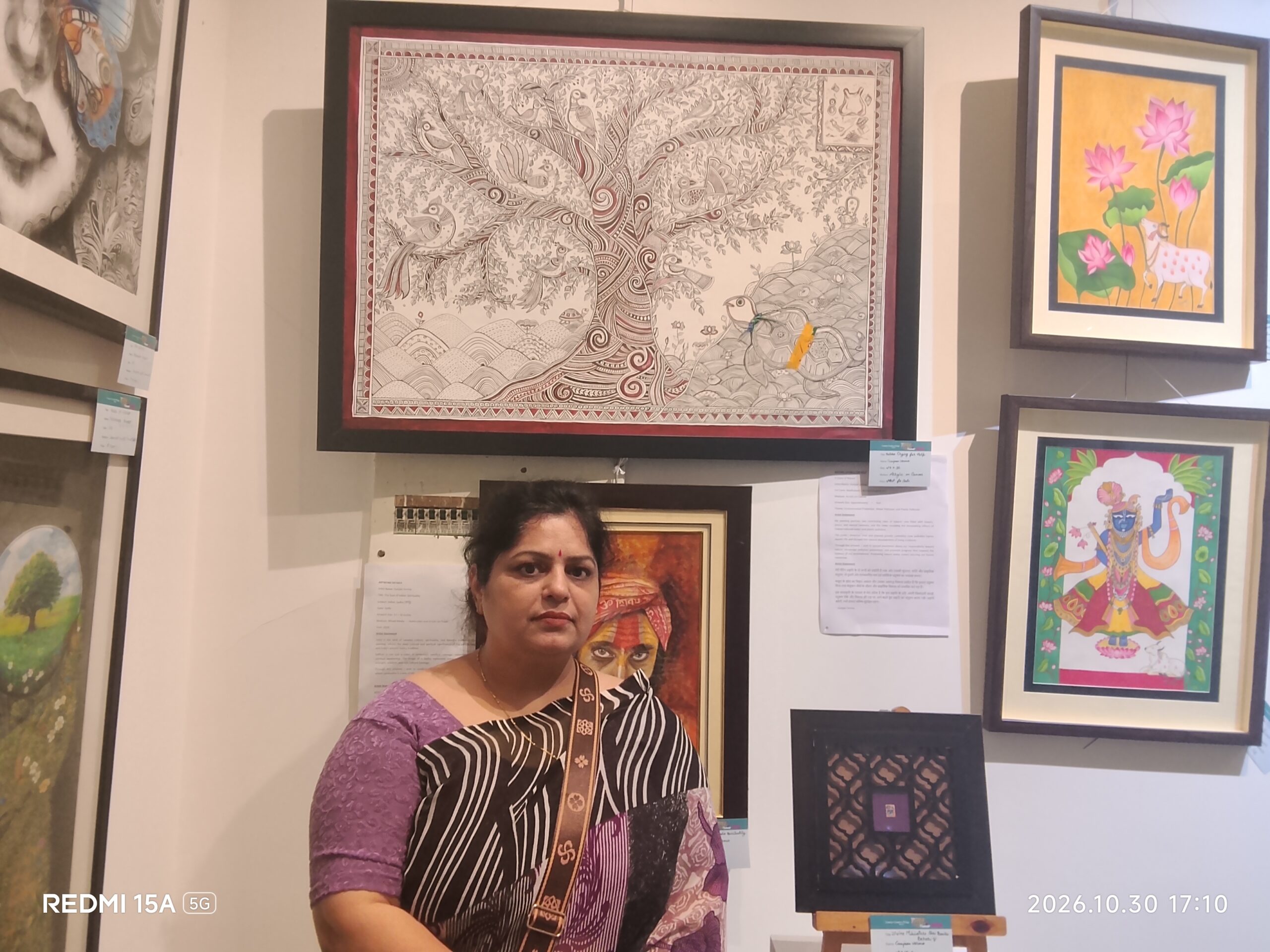
Among her exhibited works, The Divine Face of Banke Bihari Ji, a miniature watercolour painting on paper, captured the divine beauty and serene expression of the deity through delicate strokes and intricate detailing using a Triple Zero (000) fine-detail brush. The work reflected devotion, grace and the traditional richness of Indian spiritual art. Her second painting, The Soul of Indian Spirituality, portrayed an Indian Sadhu through a combination of watercolour and acrylic. The artwork explored the significance of saffron as a symbol of sacrifice, courage, renunciation and spiritual awakening, while celebrating India’s spiritual traditions and cultural heritage.
Her third artwork, Nature Crying for Help, was an environmental statement executed in Madhubani/Mithila-inspired style using acrylics on canvas. Addressing water pollution and plastic pollution, the painting presented two contrasting aspects of nature—one depicting its beauty, peace and natural harmony, and the other highlighting the damaging consequences of human activities. The distorted shell and stunted growth of a turtle symbolised the harmful impact of pollution on aquatic life and the disruption of natural ecosystems. Through this work, Gunjan sought to highlight the urgent need for environmental protection, responsible development and pollution prevention.
Speaking about her artistic journey, Gunjan Verma said, “Art is my passion and my way of expressing my thoughts, emotions and creativity. Through my paintings, I want to celebrate our cultural and spiritual heritage while also addressing issues that affect our surroundings. My work Nature Crying for Help is a reminder that protecting nature today means securing our future tomorrow.”
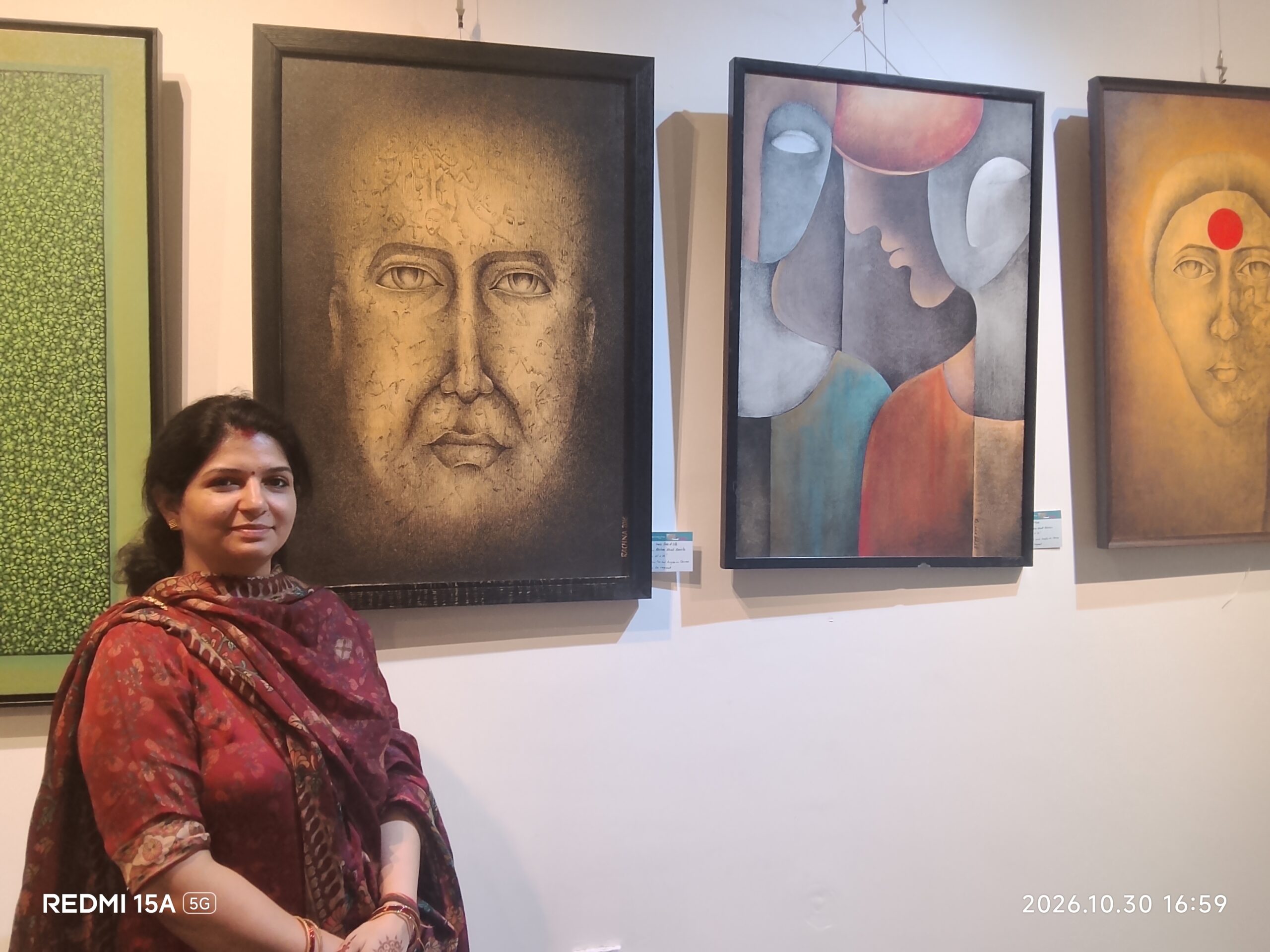
Another artist, Rachna Bhati, says about art: Art is something that comes out from the inner soul of an artist. My work is derived mainly from the surroundings I live in. It depicts the harsh realities of human nature. I limit myself to the technique I have adopted, ‘Pen & Ink ’, because I enjoy rendering in the background. My recent body of work consists of still and silent expressions captured in everyday routine. I like to create expressive art. The background itself shows many untold stories. As an artist, personally, painting is the best way to interpret the ideas I have in my mind.
Also Read : Main Shunya Hun: Manantar Art’s Inaugural Exhibition Explores the Philosophy of Shunya