Dilip Guha, Sasraya News ★ New Delhi : The second edition of the Indraprastha Dance Festival, organised by Delhi Tourism, Government of Delhi, brought together more than 150 dancers from India and abroad, offering audiences a vibrant confluence of tradition, talent and creativity against the magnificent backdrop of the historic Purana Qila in Delhi. Held from October 2 to 4, the festival celebrated the diversity and enduring cultural legacy of India’s classical dance traditions while introducing their timeless beauty to contemporary audiences.
The festival aimed at creating greater awareness about India’s rich classical dance heritage and promoting classical dance among Delhi audiences. The historic setting of Purana Qila added a distinctive dimension to the celebrations, placing centuries-old artistic traditions against one of Delhi’s most significant historical monuments. The festival featured the participation of eminent gurus, established performers and emerging talents, reflecting the continuity of India’s classical dance traditions across generations.
Also Read : The 80th birthday celebration of former Prime Minister of Bangladesh Sheikh Hasina
Adding to the experience was a special light-and-sound presentation based on the history of Delhi, Indraprastha and the Yamuna River, creating a visual link between the city’s historical past and its cultural traditions. Through performances rooted in diverse classical styles, the festival offered audiences an opportunity to experience the richness, discipline and expressive vocabulary of Indian dance forms.
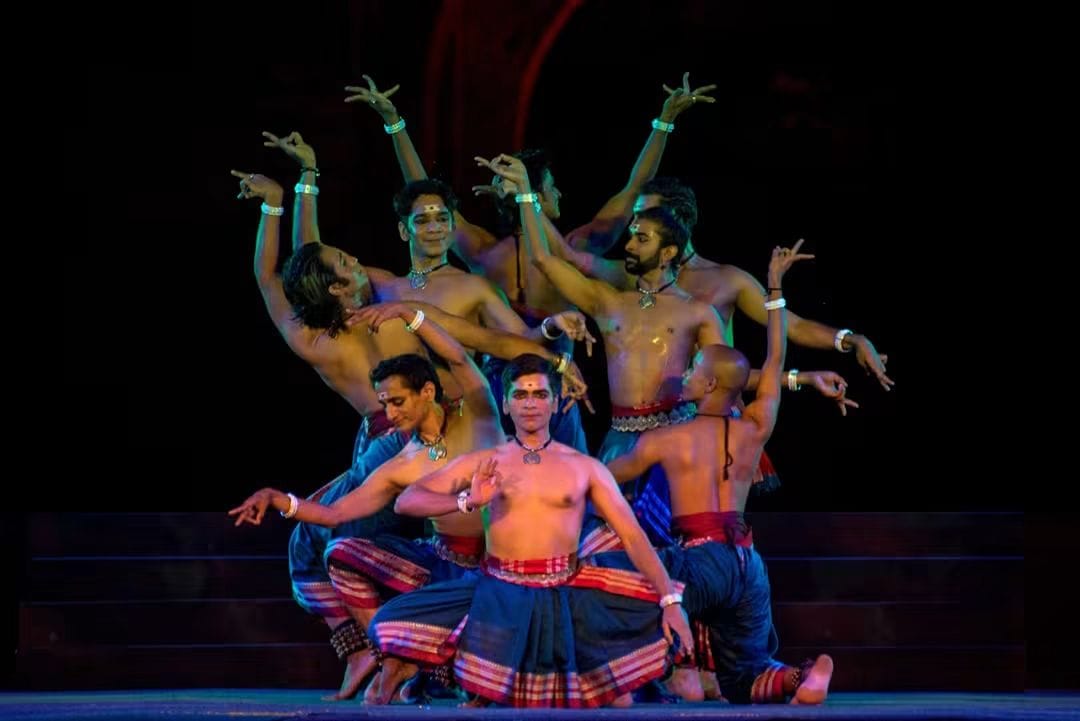
The festival concluded on a high note with “SHIVA,” a specially curated Bharatanatyam presentation by Guru Vaibhav Arekar, who also directed and choreographed the production. The presentation brought together professional male dancers from different cities and diverse guru traditions. Arekar, who heads the Mumbai-based Sankhya Dance Company, curated the ensemble especially for the festival and trained the dancers in his choreography.
Speaking about the production, Vaibhav Arekar said, “The dancers who performed in the show are all dancers who came from different cities and belong to different guru traditions. I shared and taught them my choreography and brought them together for this particular production. Only three of the dancers are my own students, while the remaining seven have trained under different gurus, including trained under different gurus, including Guru Smt. Rama Vaidyanathan from Delhi, Guru V.Mythili from Trivandrum, Guru Smt. Indira Kadambi, and Guru Shri Parshwanath Upadhya from Bengaluru. Some are alumni of Kalakshetra Foundation of Chennai and Nalanda Nritya Kala Mahavidyalaya.
“I curated the entire presentation, taught the dancers my choreography, and directed and choreographed the show. It was specially commissioned for this festival, so I came on board as both the curator and choreographer. It was also a long-standing wish of mine to work exclusively with male dancers, and this festival gave me that opportunity. That is why I am particularly happy about this production.
“All these young dancers are highly accomplished professionals, and some of them are soloists who perform brilliantly on their own. Yet, they came together with me for this production and for the festival. I feel truly honoured to have had the opportunity to bring them together and create SHIVA for this occasion.”
SHIVA portrayed Shiva as the formless Ultimate Brahman—Nirguna-Niraakara—who is nevertheless perceived through various manifestations, including Rudra, Dakshinamurthy, Umapati, Gangadhara and Neelakanth. The presentation also invoked Shiva as Nataraja, whose cosmic dance symbolises the eternal cycle of life, creation, sustenance and dissolution. Through Bharatanatyam’s expressive language, the production sought to present these philosophical dimensions through movement, music and visual design.
The vocal presentation was rendered by Sudha Raghuraman and Arun Gopinath, while the music composition was by T. Vaidynatha Bhagvatar and Sudha Raghuraman. The artistic direction, costume and lighting design were by Sushant Jadhav, with choreography and direction by Vaibhav Arekar.
The presentation featured ten dancers from different cities: Gautam Marathe, Vidhun Kumar, Sanket Sasane, Shreyas Nair, Shobhit Ramesh, Advith Khokale, Sachhidanand Narayankar, Nilava Sen, Kedar Gurav and Sarath PD.
For Arekar and Sankhya Dance Company, the production reflects a continuing artistic quest to discover modernity within classical traditions. Bharatanatyam remains the company’s principal artistic medium through which it explores, questions and engages with diverse themes and concepts relevant to dance and contemporary life.
Founded by Vaibhav Arekar in 2009, Sankhya Dance Company emerged from his vision of creating a collective of dancers deeply committed to the art of performance. With the creative contribution of co-director Sushant Jadhav, the company has grown into a recognised dance institution based in Mumbai. Its performances have taken it to prestigious venues and festivals in India and abroad, including Japan, Brazil, Canada, the United States, Poland, Russia, Germany, France and Australia.
The presentation received an enthusiastic response from the audience. A viewer remarked, “The performance was absolutely fabulous. The synchronisation, energy and expressive power of the dancers made SHIVA a truly captivating experience.”
Another viewer said, “It was a magnificent presentation of Bharatanatyam. The way the dancers brought the many dimensions of Lord Shiva alive through movement and choreography was both powerful and mesmerising.”
The Indraprastha Dance Festival thus emerged as more than a celebration of classical dance. By bringing together established gurus, acclaimed performers and young dancers, and by placing these traditions within the historic landscape of Delhi, the festival created a meaningful dialogue between heritage and the present. The convergence of diverse classical forms at Purana Qila reaffirmed the continuing relevance of India’s dance traditions and their ability to engage, inspire and connect with contemporary audiences.
Photo credit: Mr Subrata Roy
Also Read : Raktakarabi Reimagined: Tagore’s Timeless Play Finds Contemporary Resonance