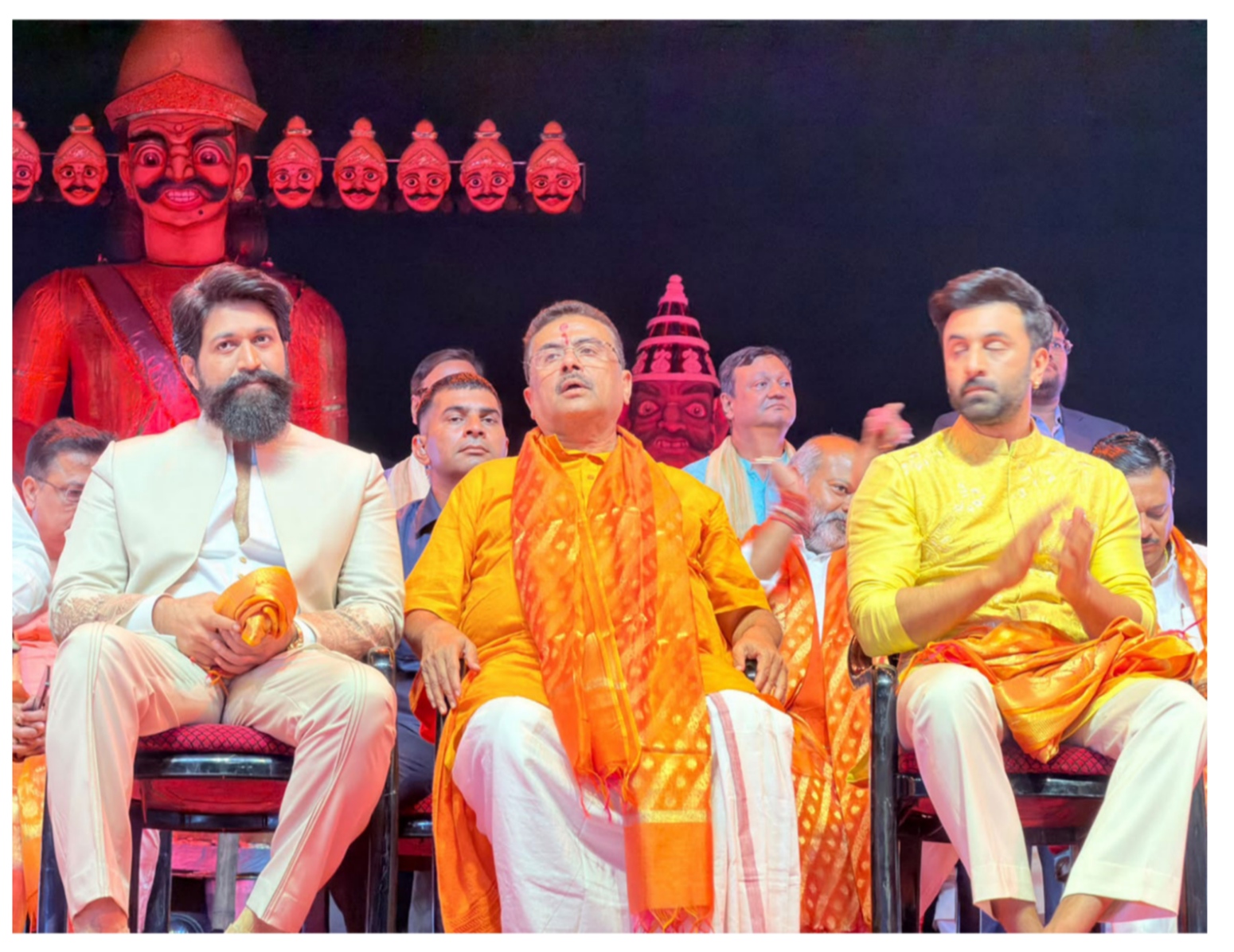
Dilip Guha, New Delhi : The 12th Bengal Mango Mela & Handloom‑Handicrafts Expo 2026 at Chittaranjan Park Bangiya Samaj culminated in a vibrant cultural evening on Sunday, 5 July, transforming the venue into a carnival of Bengal’s spirit. The packed auditorium witnessed an instrumental ensemble by renowned artists and a soul‑stirring blend of Rabindrik and devotional dance, offering Delhi audiences a rich glimpse into Bengal’s diverse traditions.
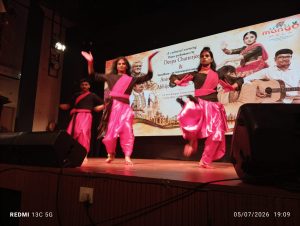
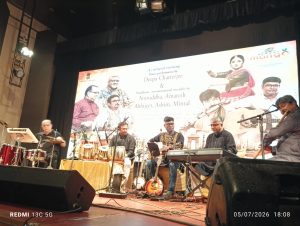
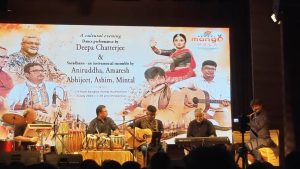
The cultural evening reached a memorable crescendo with Suradhanu, a live instrumental performance by a local ensemble making its debut in this unique format. Featuring Anirudh Chowdhury on Keyboard, Ashim Das on Tabla, Bangla Dhol, Khol, & Kanjira, Amaresh Chakraborty on Octopad and drums, Avijit Chakraborty on flute, and Mintal Gazi on Guitar, Mandolin, Tanner, and ektara. The group enthralled the audience with a captivating musical presentation that seamlessly blended melody, rhythm, and artistic expression.
Their instrumental fusion Presentation Line‑Up began with the soulful Rai Jago Kirtan, seamlessly blending into the rustic rural charm of Gram Chara Oi Rangamatir Poth.
Follow with the experience of the elegance of Raag Jog in a classical fusion that bridges tradition and modernity.
Let the folk spirit of “Montare” stir the heart with its earthy resonance.
They paid homage to maestro Satyajit Ray through his timeless theme music and the joyous “Aha Ki Anondo Akashe Batashe”. Travel westward with lively strains of country folk music, and conclude with “Kirtan Ekla Nita”, rising into the iconic “Ekla Cholo Re” and ending with the collective chant of “Hori Bol”.
This arrangement balances devotional, classical, folk, cinematic, and Western influences, creating a journey from tradition to modernity and from local to global. A celebration of devotion, artistry, and cultural harmony — crafted to leave audiences inspired and uplifted.
For Aniruddh of “Suradhanu: An Instrumental Ensemble”, the final night of Mango Mela was about letting silence speak louder than words. Speaking with Anirudh Chowdhury on the arrangements and concept of the program, he said, “The mangoes were almost gone, but the music had just begun. On the last evening at Chittaranjan Park Bangiya Samaj, we let the instruments do the talking. No lyrics, no vocals — just kirtan, Rabindra Sangeet and Bangla music, with a touch of classical fusion. When words fall away, people listen with their hearts.”
Also read : Kalpataru Day Observed with Spiritual Fervour at Noida Kalibari for the First Time
“Bangla Music poured entirely through instruments, with some classical fusion stirred in for good measure, played by us musicians who’ve spent decades perfecting this craft in Delhi. This new blend of instrumental music floated through the room without a single word attached to it, and somehow that made people listen harder, not less.”
“We’re grateful to Dr. Saswato Dawn and the office of the Principal Resident Commissioner of West Bengal for trusting us to close the festival this way. Some nights you remember what was said. We’ll remember this one for everything that didn’t need to be said,” he added.
At the conclusion of the performance, the ensemble expressed heartfelt gratitude to the distinguished dignitaries present, acknowledging their encouragement and support for local artistic talent.
“This was our very first preparation. There were a few rough edges, but we managed, and hopefully it went well. We are sincerely thankful to the office of the Principal Resident Commissioner for giving us this opportunity. The group expressed gratitude to dignitaries present, including. Dr Saswato Dawn, Ashish Jana, and senior guest Amitabh Mukhopadhyay,” said Amaresh on behalf of the group.
Their performance added a vibrant cultural dimension to the evening and drew warm appreciation from those in attendance.
Also read : New Hope and Light: Commemorating 163 Years of Swami Vivekananda at Vivek Utsav 2026 in Delhi
Spotlight on Nritya Kalakshetra Bharatanatyam
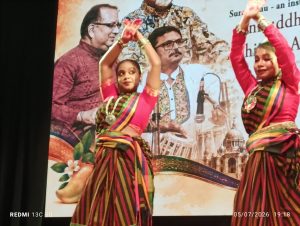
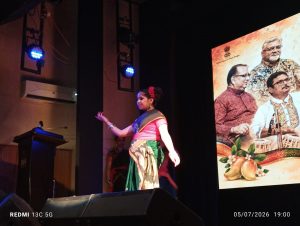
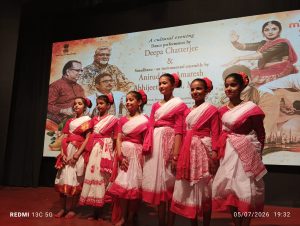
The highlight of the evening was a special production by Nritya Kalakshetra Bharatanatyam, led by renowned danseuse Dr Deepa Chatterjee. Choreographed and directed by Dr Chatterjee herself, the performance wove together Bengal’s folk wisdom, Rabindra Sangeet, and devotional music.
A disciple of Padma Bhushan Dr Yamini Krishnamurthy, Dr Chatterjee began her training in 1983 and later served as faculty at her guru’s institution from 2002 to 2013. She is a nationally recognised artiste, empanelled with Doordarshan, and has trained in Chhau and Ballet at Shriram Bharatiya Kala Kendra and is also proficient in Folk and Rabindra Sangeet-based dance.. Through Nritya Kalashetra Bharatanatyam, founded in 1995 and affiliated with Rabindra Bharati University, she continues to nurture young talent across Delhi NCR.
With over four decades of dedication, Dr Chatterjee has performed extensively across India and served as Chief Guest and Judge at prestigious cultural festivals, including Delhi Government’s Kala Utsav and leading universities/colleges. Her institution remains a beacon for young dancers, upholding the excellence of Bharatanatyam while embracing Bengal’s cultural ethos.
A Bengal Story in Nine Acts
Her presentation, A Bengal Story in 9 Acts, unfolded through nine dance pieces rooted in Bengal’s folk, Baul, and Rabindra Sangeet traditions:
Dr Deepa Chatterjee’s production unfolded through nine evocative dance pieces, each performed by young artistes of Nritya Kalakshetra Bharatanatyam. Together, they captured Bengal’s folk, Baul, and Rabindra Sangeet traditions, resonating with the Mango Mela’s theme.
Hridoyo Mondrilo Damru Guru By Devashree: A devotional folk opener evoking Lord Shiva’s drum, setting a spiritual and energetic tone.
Jethai Jabi Chol By Nishika, Mishika, Khushi, Sakshi & Kritika. A playful group folk song celebrating the carefree spirit of rural Bengal.
Jigija Gijang & Kada Dili Sada Kapode By Sarakshi & Raisa. A duet blending rhythmic folk drama with light‑hearted mischief.
Faguner Kal Ailore & Sundori Bala By Shradha, Bhavya & Shreya. Spring‑themed dances celebrating renewal, beauty, and Rabindra‑influenced lyricism.
Faguner Mohonay & Rongila Re By Ananya, Aarohi & Nisha. A colourful set evoking Holi’s vibrancy and Rabindra Sangeet’s sweetness.
Ullongini Nache By Suhail, Hemant & Jahnvi. Tribal‑inspired trio depicting nature, freedom, and celebration.
Kasai Silai By Rupsa & Khoyais: A Baul metaphor of weaving life, love, and destiny, expressed through minimalist choreography.
Rangiya Diya Jao By Arpita & Devashree: A playful duet evoking Holi’s colours and folk vibrancy.
Kar Maiya Rone Nache By Hemant & Shradhya. A poignant devotional finale, closing the set on an emotional note.
Backstage contributors Dibya, Tania, Ranjit, and Sushant ensured seamless execution, while the audience responded with warm applause, moved by the performance’s authenticity and artistry.
In a gesture unique to the mela, the Office of the Principal Resident Commissioner, Government of West Bengal, felicitated the artists with crates of mangoes. As the anchor remarked, “Just as Bengal’s mangoes are unique, so was their performance — rooted in our soil and Indian classical gharana.”
The evening captured the essence of Bengal — deeply traditional yet vibrantly resonant for a Delhi audience — leaving festival‑goers with a lasting impression of cultural pride and celebration.
Also read : Housefull Screens, Star Power, and a City in Sync: IFFD 2026 Makes a Landmark Debut