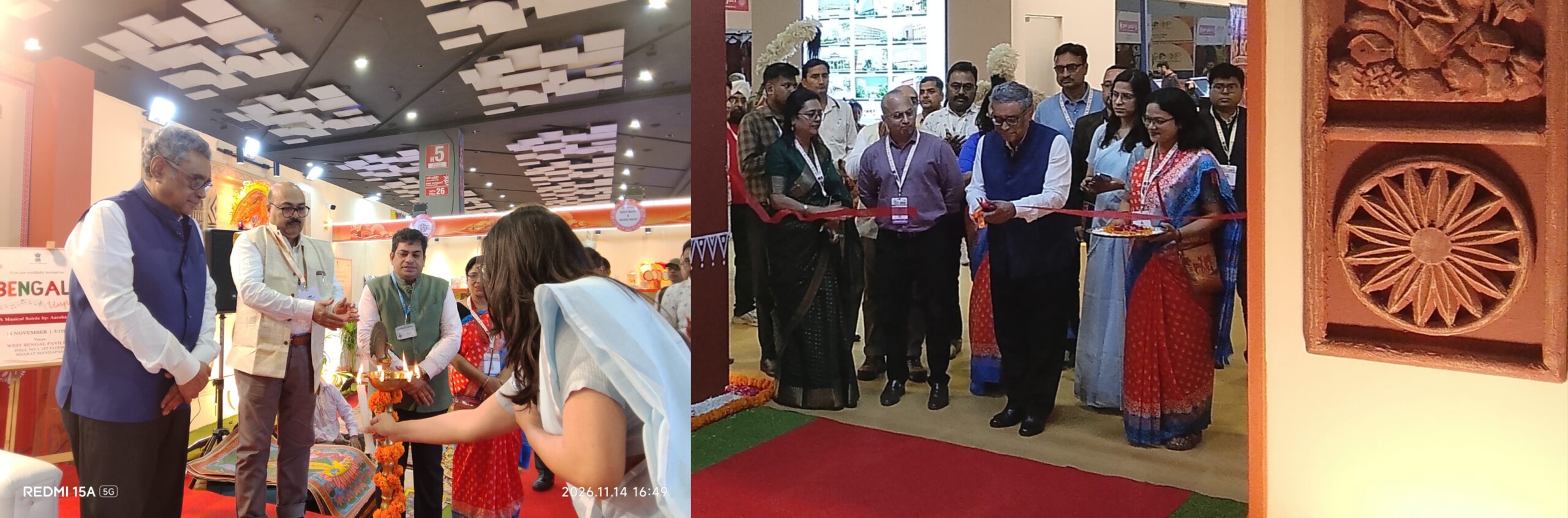
Dilip Guha, New Delhi ★ Bharat Mandapam: West Bengal emerged as one of the major attractions at the 45th India International Trade Fair (IITF) 2026, participating as one of the Focus States and showcasing its rich cultural heritage, traditional crafts, industrial potential and development initiatives. Chief guest Shri Swapan Dasgupta, Minister-in-Charge, Finance Department, Government of West Bengal, inaugurated the West Bengal Pavilion on November 14 at a ceremonial function attended by senior officials and other dignitaries.
Also Read : Delhi Embarks on a New Journey of River Tourism with the Launch of ‘Namo Yamuna River Safari’
The India International Trade Fair (IITF), organised by the India Trade Promotion Organisation (ITPO), is a major national platform bringing together trade, commerce, industry, entrepreneurship, culture, tourism and investment opportunities. As a Focus State at IITF 2026, West Bengal seeks to project its distinctive identity as a land where centuries-old cultural heritage, traditional craftsmanship and indigenous enterprise converge with modern infrastructure, industrial growth, technological advancement and emerging economic opportunities. The West Bengal Pavilion is conceptualised not merely as an exhibition of products, but as an integrated representation of the State’s economic potential, cultural richness and developmental aspirations.
This year’s participation as a Focus State gives West Bengal a significant opportunity to showcase its diverse strengths on a prominent national platform. The pavilion reflects the central theme of the fair, Vikas aur Virasat (Development and Heritage), highlighting the state’s endeavour to combine economic progress with its rich cultural legacy.
Speaking on the occasion, officials described West Bengal’s participation as a fitting reflection of the theme, emphasising how the state’s cultural traditions and developmental aspirations come together in its presentation at the national-level trade fair.
West Bengal is among 32 States and Union Territories participating in this year’s IITF, alongside 51 Central Ministries, Departments and Public Sector Organisations, and more than 3,500 exhibitors.
The two-week fair features several new attractions, including the Hall of Inspiration, which is hosting 500–600 startups for the first time. Visitors can also explore 90 food outlets, enjoy 87 cultural performances and experience an immersive AI-AR-VR zone designed to engage younger audiences.
The West Bengal Pavilion is expected to attract considerable visitor interest with its showcase of traditional crafts, industrial achievements, regional cuisine and development initiatives. Its participation as a Focus State offers a glimpse into the state’s rich cultural identity while highlighting its evolving economic landscape.
Through this presentation, West Bengal seeks to underline a larger message: development and heritage are not competing priorities but complementary forces that can shape a state’s identity and future.
West Bengal has re-emerged as a key participant in India’s growth journey and national development agenda, said Shri Swapan Dasgupta, Minister-in-Charge, Finance Department, Government of West Bengal, while inaugurating the West Bengal Pavilion as the Focus State at the 45th India International Trade Fair (IITF) at Bharat Mandapam.
Addressing visitors and exhibitors, the Minister said the state’s presence as the Focus State reflects its renewed role in the country’s development narrative.
“The fact that West Bengal today is a Focus State is a matter of pride. For reasons I need not elaborate upon, the state had, for some time, remained somewhat on the margins of the national development process. Today, we are back in the forefront, back in the mainstream of the national endeavour,” he said.
Call to Harness Private Sector Creativity
Highlighting the strong participation at the fair, Shri Dasgupta noted that the current representation is weighted towards the public sector and called for greater engagement of private enterprises in the years ahead.
“Exhibitors are present here in large numbers, though participation may currently be somewhat weighted in favour of the public sector. Going forward, there should be a greater effort to mobilise the immense creative and entrepreneurial talent that exists in West Bengal’s private sector. That must be a priority,” he said.
The Minister emphasised that leveraging private sector innovation and enterprise would play a crucial role in accelerating the state’s economic growth and competitiveness.
From Virasat to Vikas
Referring to the IITF theme, ‘Vikas aur Virasat’, Shri Dasgupta said West Bengal’s contribution to India’s cultural and intellectual heritage is widely recognised, but stressed the need to complement that legacy with a stronger development agenda.
“Virasat is an integral part of West Bengal’s identity, and the nation is fully aware of our contribution to its rich cultural heritage. The challenge has been that the Vikas component has often remained underemphasised. I hope that in the coming years we will be able to add Vikas in full strength to our inheritance, our legacy and the rich traditions that we proudly uphold,” he said.
Describing the state’s participation in IITF as an important milestone, Shri Dasgupta expressed confidence that it marks the beginning of a larger journey towards reclaiming West Bengal’s rightful place in the nation’s economic and developmental landscape.
“I wish this exhibition great success. I am confident that this is only a small first step in West Bengal reclaiming its true inheritance and rightful place in the country,” he added.
Also Read : IFFD 2026 Opens to Packed Halls, Star Presence and Strong Industry Turnout in New Delhi
Pavilion Blends Bengal’s Heritage with a Vision for the Future
The West Bengal Pavilion has been conceptualised around the theme Vikas aur Virasat (Development and Heritage), portraying the state’s journey from its glorious cultural past towards a progressive, modern and opportunity-driven future. Its visual narrative moves from traditional rural Bengal, terracotta temples, agriculture and indigenous craftsmanship to contemporary manufacturing, modern rail connectivity, investment opportunities and a technology-enabled economy.
The pavilion brings together nine state departments, with dedicated stalls showcasing the diverse dimensions of Bengal’s heritage and development. The MSME and Textiles Department has the largest presence with 13 stalls, featuring traditional handlooms, handicrafts and artisan-led enterprises. Self-Help Groups and Self-Employment, and Panchayats and Rural Development have five stalls each, highlighting women-led initiatives, rural livelihoods and grassroots entrepreneurship. Other participating departments include Tribal Development (two stalls), Information and Cultural Affairs, Tourism, Animal Resources Development, Agricultural Marketing, and Industry, Commerce and Enterprises.
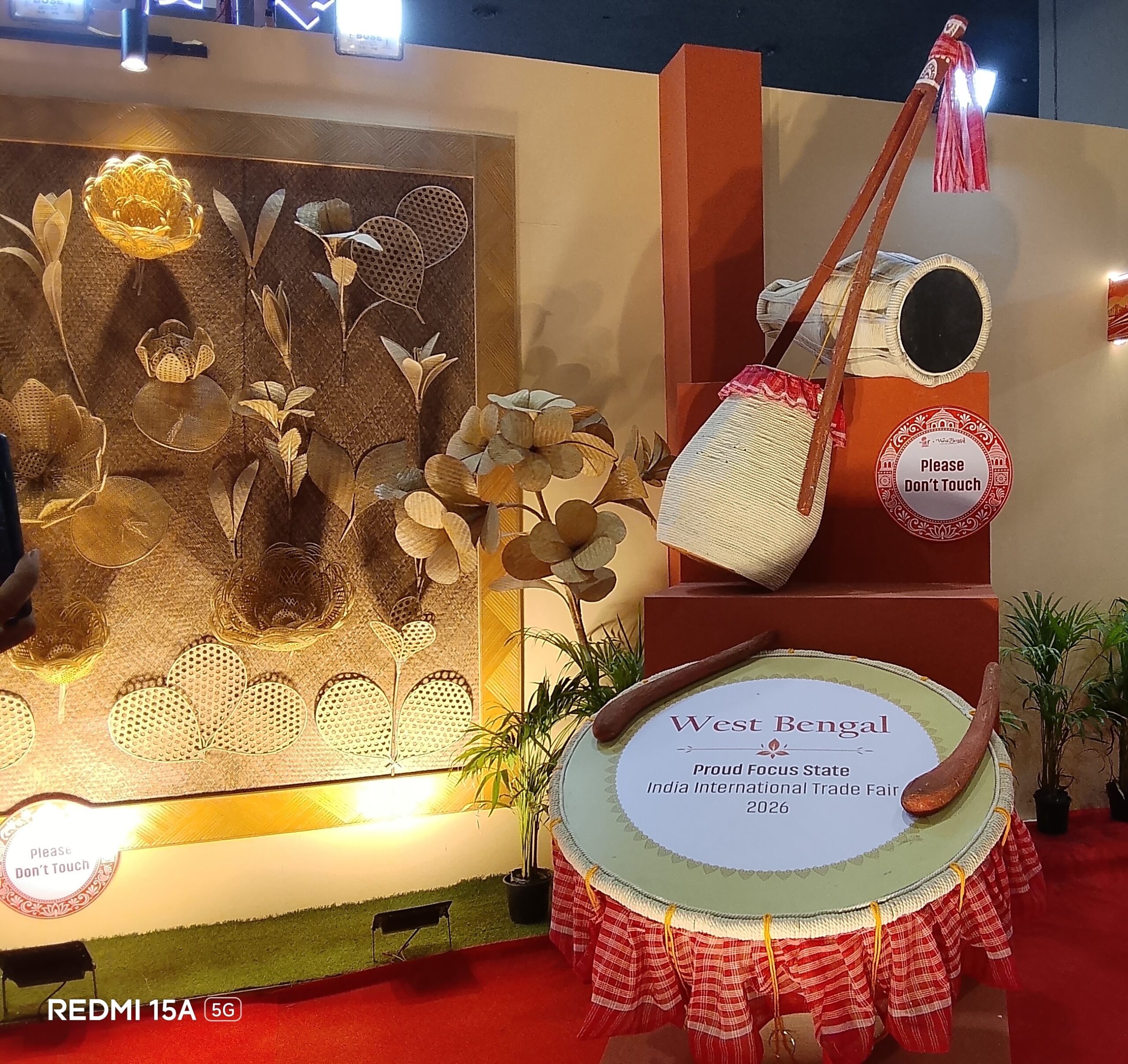
The exhibition presents Bengal’s artistic and craft traditions, including terracotta, Dokra, Patachitra, Shola, Kantha and Madurkathi, alongside traditional textiles and products associated with nationally recognised artisans. It also celebrates the state’s literary, intellectual and spiritual legacy through references to eminent personalities such as Rabindranath Tagore, Swami Vivekananda, Netaji Subhas Chandra Bose, Raja Rammohan Roy and Satyajit Ray. Spiritual destinations such as Dakshineswar, Belur Math, Kalighat and Gangasagar, along with cultural traditions like Durga Puja, Baul music and Chhau, form an integral part of the presentation.
Tourism and regional identity receive special attention, with Bengal’s diverse destinations ranging from Darjeeling and Kalimpong to the Sundarbans and Bishnupur finding representation. Visitors can also explore the state’s culinary heritage through traditional Bengali sweets and cuisine, with live counters featuring Darjeeling tea and Kalimpong coffee.
Adding to the visitor experience are live artisan demonstrations, a Bengal-themed Book Café, cultural performances, a podcast and media zone, business-interaction facilities and digital exhibition displays. The pavilion’s design combines terracotta textures, indigenous craft motifs and earthy colours with contemporary architecture, modern lighting and digital technology.
Beyond its cultural showcase, the pavilion highlights West Bengal’s development priorities, including industrialisation, investment promotion, manufacturing, infrastructure, modern transportation, agricultural value addition, food processing and technology-driven entrepreneurship. Particular emphasis is placed on inclusive economic opportunities through women-led enterprises, tribal entrepreneurship, MSMEs, artisans and rural businesses.
Through this integrated presentation, the state aims to provide artisans and entrepreneurs with greater market exposure, encourage buyer-seller interactions and business networking, and attract investment interest. The broader message is that Bengal’s heritage is not separate from its development; rather, its cultural wealth, traditional skills, and human resources provide the foundation for its future growth.
As the pavilion’s central message underscores: “Our heritage is our strength, our people are our greatest asset, and development is our way forward.” Said the organiser.
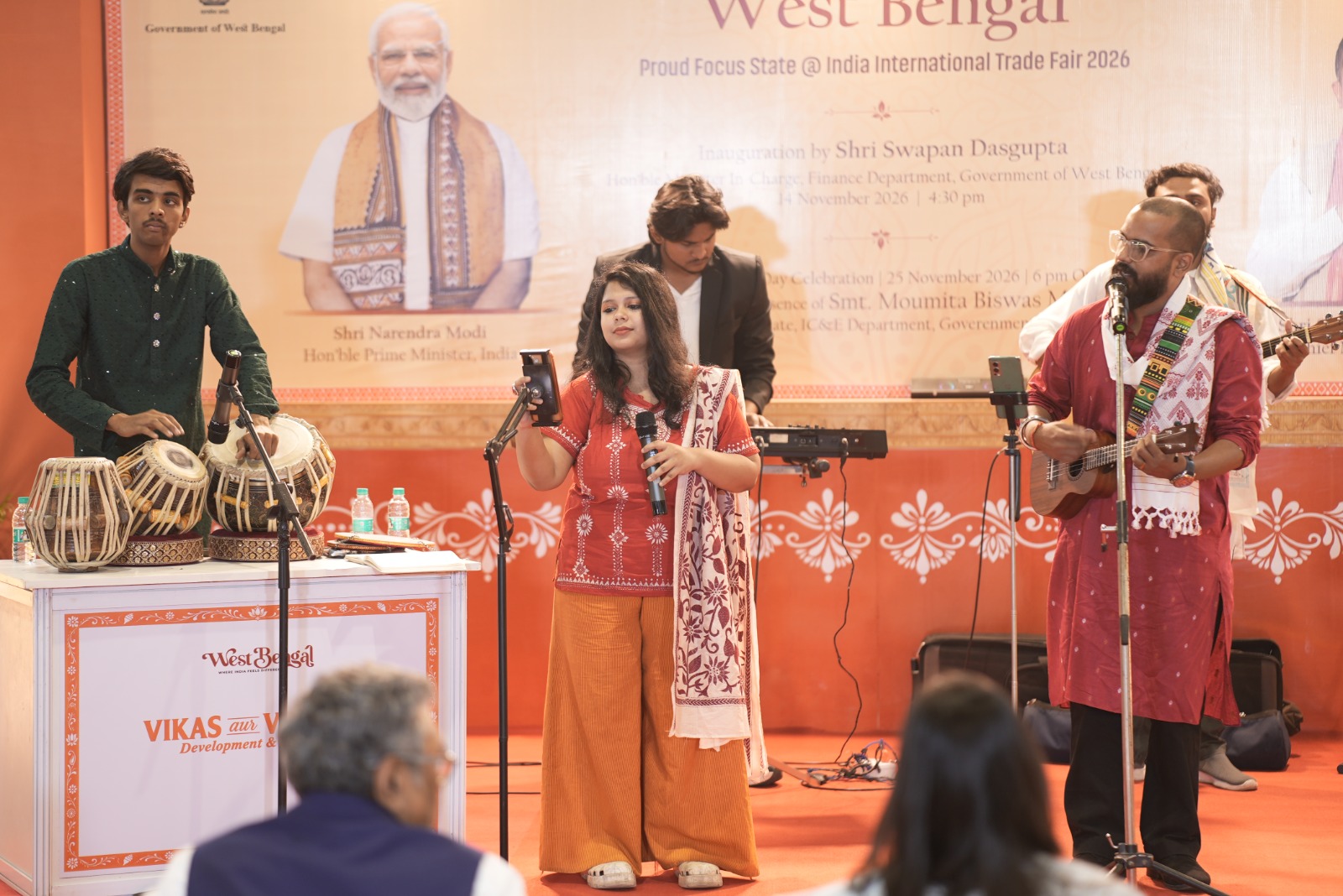
The inaugural ceremony of the West Bengal Pavilion at the India International Trade Fair (IITF) 2026 concluded on a soulful musical note, with a captivating live performance by fusion band AAROHA.
Also Read : AI:India set to host Global AI Impact Summit in New Delhi, Launches Kaushal Rath for AI Literacy New Delhi