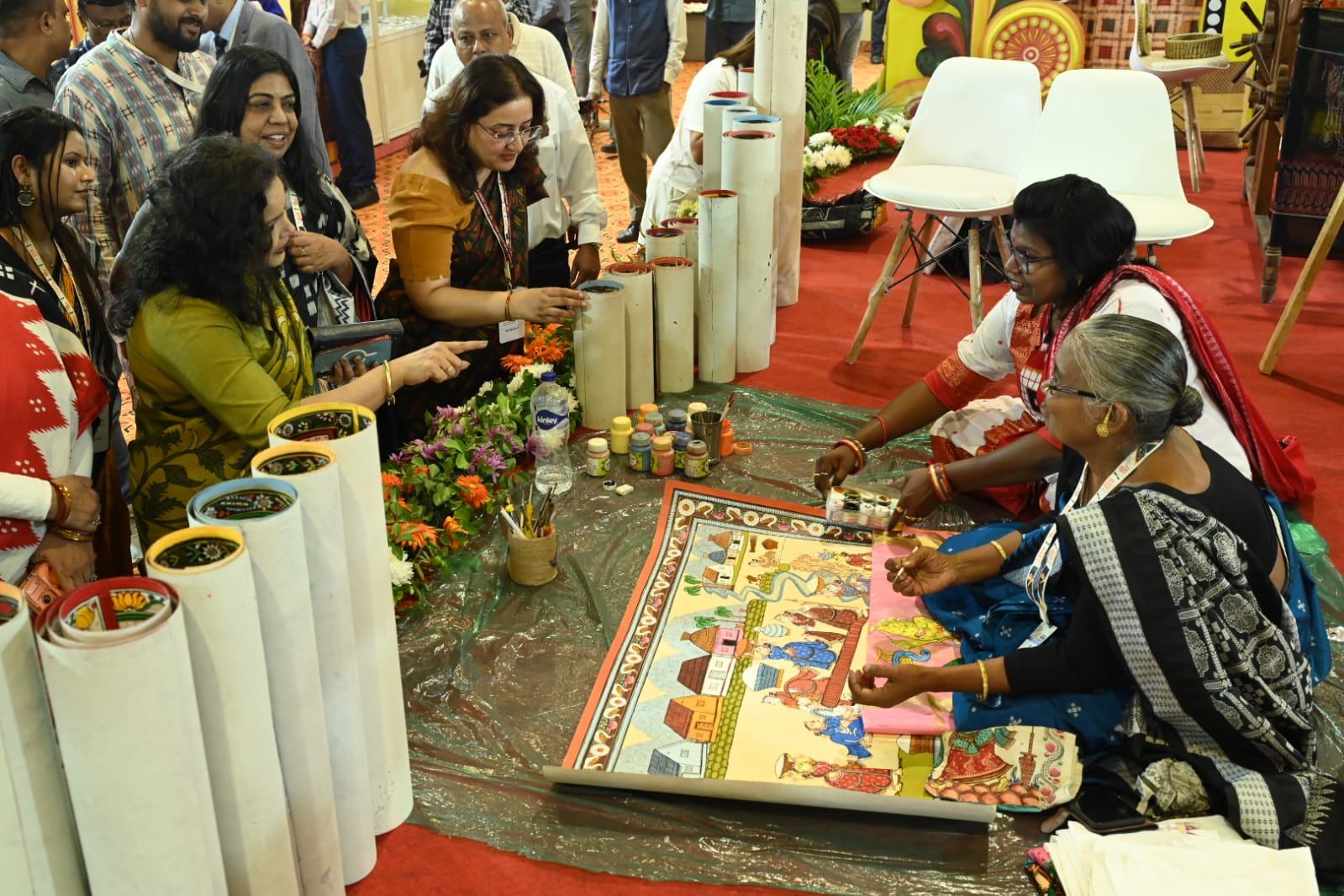
Dilip Guha, Sasraya News ★ New Delhi : From traditional handlooms and tribal crafts to women-led enterprises, indigenous products and innovative business initiatives, Odisha presents a vibrant picture of heritage-driven development at Bharat Mandapam.
 Also Read: WEST BENGAL BACK IN THE MAINSTREAM OF NATIONAL DEVELOPMENT, SAYS SWAPAN DASGUPTA AT IITF-2026
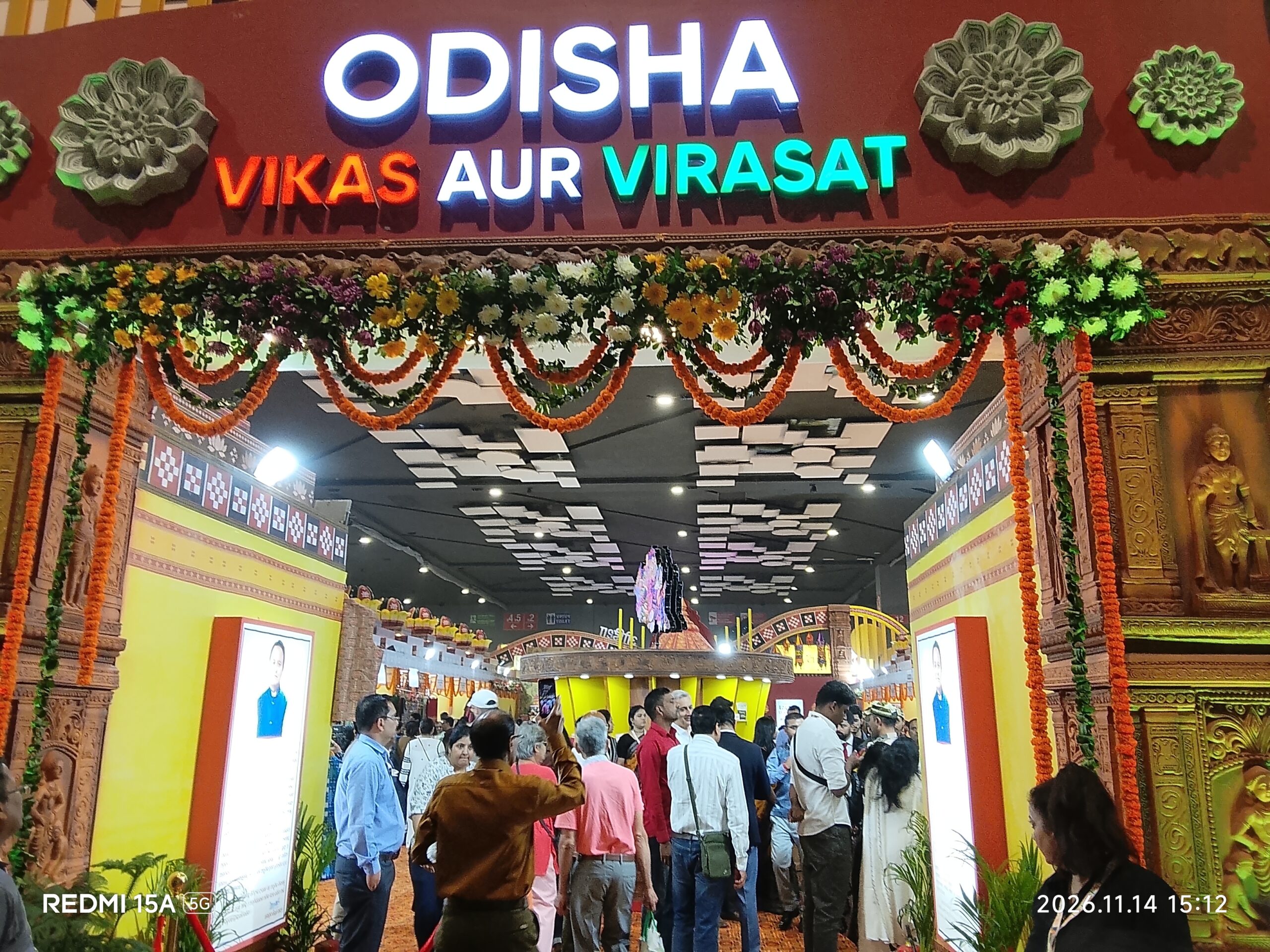
The rich cultural heritage, traditional craftsmanship and emerging economic strengths of Odisha came alive at the ongoing 45th India International Trade Fair (IITF)-2026, as the State presented an impressive showcase of its diverse traditions, indigenous products, entrepreneurial initiatives and development achievements at the Odisha Pavilion in Hall-3, Bharat Mandapam, New Delhi. Inaugurated on 14 November 2026 by Chief Secretary, Government of Odisha, Smt. Anu Garg, the pavilion has been conceptualised around the theme ‘Where Virasat Inspires Vikas’, reflecting the overarching theme of the fair, ‘Vikas aur Virasat’. Through an engaging blend of heritage, enterprise and innovation, Odisha has sought to demonstrate how its rich cultural legacy, traditional knowledge and indigenous resources are contributing to its contemporary development journey.
Addressing the gathering at the inauguration, Chief Secretary Smt. Anu Garg emphasised the importance of showcasing Odisha’s rich heritage and contemporary development journey on a national and international platform. She observed that the State’s traditional skills, indigenous knowledge, cultural identity and abundant natural resources constitute a strong foundation for its growth aspirations. Highlighting the need to connect local producers with wider markets, she stressed the importance of creating greater opportunities for artisans, weavers, farmers, tribal communities, women’s Self-Help Groups (SHGs) and entrepreneurs. Such initiatives, she noted, would enable them to access larger markets, strengthen their livelihoods and benefit from emerging economic opportunities. She also encouraged visitors and stakeholders to explore the wide range of products and development initiatives showcased at the pavilion.
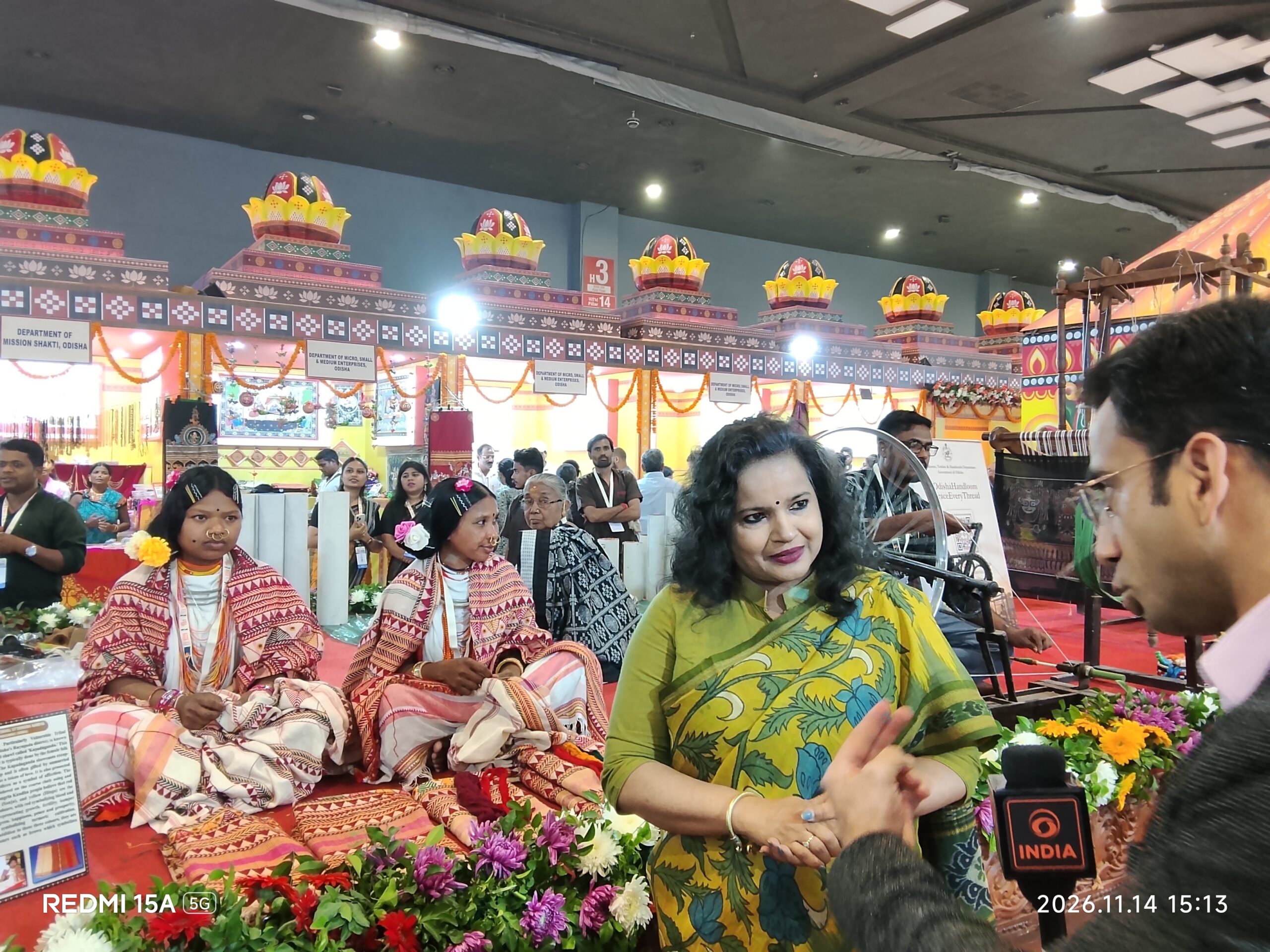
Spread across an extensive exhibition space, the Odisha Pavilion brings together an impressive collection of handlooms, handicrafts, Geographical Indication (GI)-tagged products, tribal art, agricultural produce, forest-based products, dairy products, rural enterprises and tourism attractions. Representing various government departments, institutions, cooperatives, agencies and producer organisations, the pavilion offers visitors a comprehensive glimpse into the State’s efforts to preserve its cultural identity while promoting innovation, entrepreneurship and sustainable development.
One of the major attractions is the remarkable diversity of Odisha’s handloom and handicraft traditions. The intricate designs of Sambalpuri textiles, along with cotton, tussar and silk products, reflect the exceptional skills and creativity of the State’s weavers. Equally captivating are the traditional Pattachitra paintings, palm-leaf engravings, silver filigree, Dhokra metal craft, stone and wood carvings, applique work and other indigenous creations. Adding a live cultural dimension to the exhibition, artisans demonstrate the intricate processes involved in silver filigree, Dhokra casting, stone carving and traditional weaving, allowing visitors to witness the skill, patience and craftsmanship behind these traditional art forms. An especially interesting feature is the display of blockchain-enabled handloom weaving, demonstrating how modern technology can complement traditional craftsmanship while enhancing transparency and traceability in the handloom sector.
The pavilion also highlights the growing contribution of women-led enterprises and rural entrepreneurship to Odisha’s economy. Mission Shakti showcases an extensive range of products developed by women Self-Help Groups, including Sabai grass crafts, tribal jewellery, paper-mache creations, millet-based products, ready-to-eat delicacies, handlooms and handicrafts. ORMAS presents another vibrant collection of rural products, featuring Golden Grass crafts, spices, millet products, pickles, Mahua-based products and coir crafts. Together, these displays underline the significant role of grassroots enterprises in empowering women, generating sustainable livelihoods, promoting local resources and advancing inclusive economic growth.
Odisha’s rich tribal heritage finds prominent representation through Gond and Lanjia Saora paintings, the distinctive Dongria Kondh shawl, Minor Forest Produce and value-added tribal products. Koraput Coffee, in particular, draws attention to the State’s growing recognition for its distinctive agricultural and forest-based produce. The agricultural section features millets, Black Rice, traditional rice varieties, cashew, honey, spices and value-added millet products, highlighting Odisha’s potential in sustainable farming, food processing and the preservation of indigenous agricultural practices. These products also reflect the diversity of the State’s natural resources and the traditional knowledge of its farming and tribal communities.
The pavilion further showcases the State’s dairy and organic product sectors through OMFED’s range of dairy products and organic Kandhamal Haldi. Odisha Tourism adds another important dimension to the presentation by inviting visitors to explore the State’s spiritual, cultural and natural treasures. The iconic Sun Temple at Konark, the sacred Jagannath Dham at Puri and the ecologically significant Chilika Lake feature prominently, highlighting Odisha’s diverse tourism potential and its appeal as a destination for heritage, spirituality and nature-based experiences.
Beyond cultural presentation and product displays, the pavilion has also been designed as a platform for business development and market expansion. Dedicated Export and Business-to-Business (B2B) platforms facilitate interactions among producers, entrepreneurs, buyers, exporters, investors and industry stakeholders. These initiatives aim to strengthen market linkages, encourage business partnerships and create wider opportunities for Odisha’s traditional and contemporary products in domestic as well as international markets. By bringing producers and potential buyers together, the pavilion seeks to transform the exhibition experience into meaningful business connections and opportunities for economic growth.
Khajuri Guda: Odisha’s traditional sweetness wins visitors’ hearts
Among the diverse products attracting attention at the Odisha Pavilion, Khajuri Guda, the traditional date palm jaggery of Odisha, has emerged as a particularly popular attraction, drawing visitors looking for a natural sweetener with a distinctive taste and a strong connection to rural traditions. Some tastes need no introduction; they simply evoke memories. At IITF-2026, this traditional delicacy is doing just that, bringing a flavour of Odisha’s countryside to the national stage.
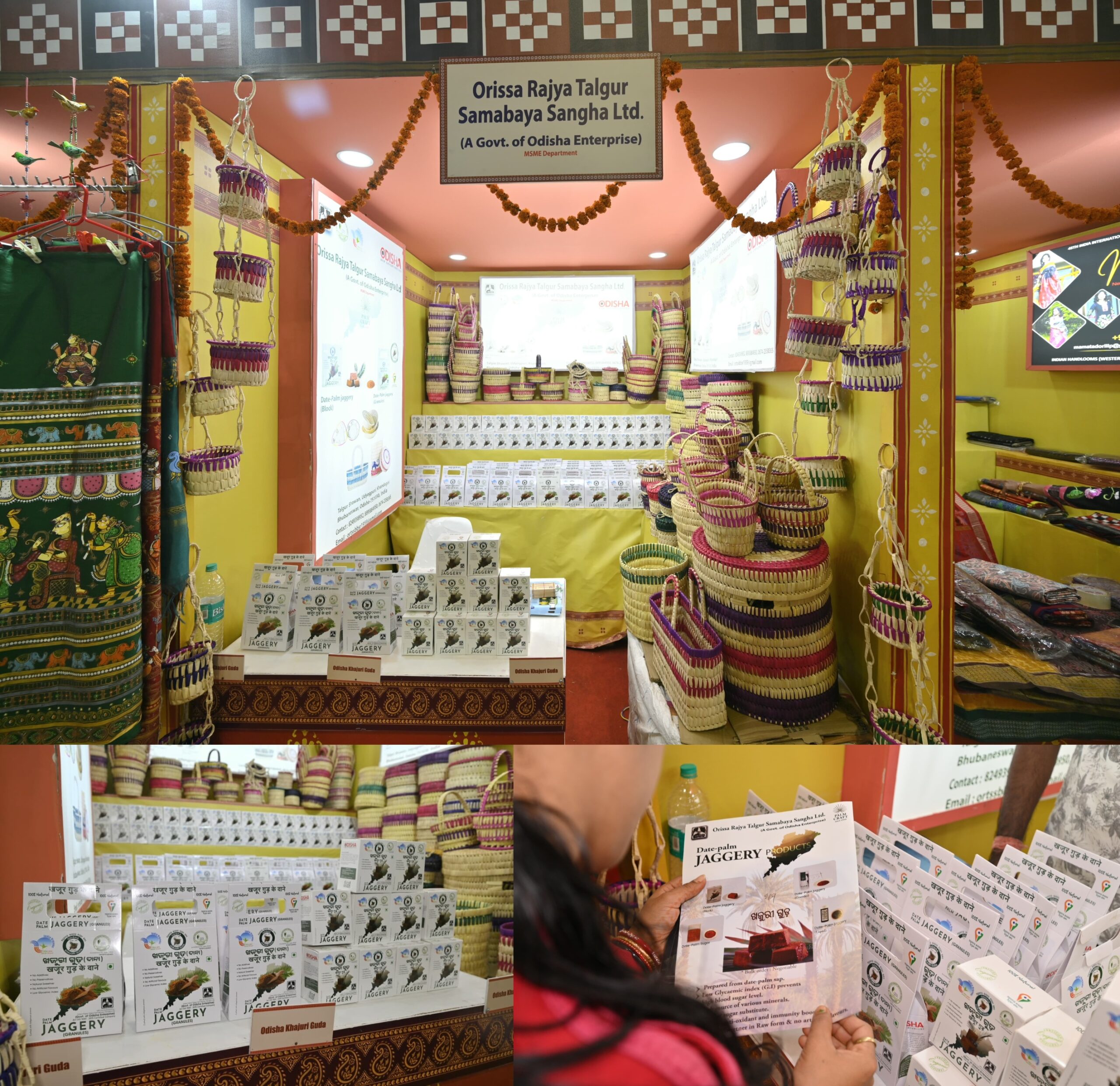
Visitors are not merely stopping to look at the product; many are specifically seeking it out at the pavilion. Available in the form of small granules and locally known as Khajuri Guda, this traditional sweetener is finding new admirers at Bharat Mandapam. Its natural taste, simplicity and association with Odisha’s rural heritage have made it a sought-after product among fairgoers.
Presented by the Odisha Rajya Talgur Samabaya Sangha Limited, a Government of Odisha initiative, Khajuri Guda is being introduced to visitors as a natural sweetener prepared from date palm sap, without additives or preservatives. With minimal artificial flavouring and a low glycemic index, it offers an alternative to refined sweeteners. Members of the Sangha are actively engaging with visitors, explaining its traditional preparation, natural qualities and cultural significance. As awareness grows, an increasing number of visitors are choosing to take this traditional taste of Odisha back home.
The story of Khajuri Guda begins far away from the exhibition halls, in the palm groves where date palm sap is carefully collected and transformed into jaggery through traditional methods. Behind every granule lies the knowledge and experience of rural communities, the sustainable use of local resources and a traditional practice that continues to retain its relevance in changing times. At IITF, this rural product is reaching audiences beyond Odisha, one visitor and one purchase at a time.
Pavilion sales cross ₹18 lakh; footfall exceeds 52,000
The encouraging response to Odisha’s participation at IITF-2026 is also reflected in the overall sales and visitor numbers. According to the organisers, cumulative sales across all participating stalls of the Odisha Pavilion have crossed ₹18 lakh, while the total footfall has surpassed 52,000 visitors. The figures underline the growing interest in Odisha’s diverse offerings, ranging from agricultural and food products to handlooms, handicrafts, tribal products and rural enterprises.
The response reflects the pavilion’s success in bringing together a wide spectrum of the State’s traditional and contemporary strengths under one roof. From the intricate craftsmanship of its weavers and artisans to the entrepreneurial initiatives of women’s Self-Help Groups, tribal communities, cooperatives and rural producers, the exhibition provides an opportunity for local enterprises to showcase their products directly to a diverse national and international audience.
The Odisha Pavilion continues to attract appreciation for presenting a compelling picture of how cultural heritage can become a catalyst for economic development. Its participation at the trade fair goes beyond showcasing products; it creates a valuable platform for artisans, cooperatives, women-led groups, farmers and entrepreneurs to connect with consumers, explore business partnerships and access wider markets.
At IITF-2026, Odisha’s story is being told through its textiles, paintings, crafts, agricultural produce, tribal traditions, tourism destinations and emerging enterprises. And among these diverse expressions of its heritage, Khajuri Guda stands out as a reminder that even a humble traditional product can carry the identity of an entire region. More than just a sweetener, it represents the soil, people, livelihoods and traditions of Odisha, finding its way into homes far beyond the State and demonstrating how ‘Virasat’ can truly inspire ‘Vikas’.
Also Read: ‘Sei Ek Binodini’: Revisiting a Legend, Reclaiming a Voice