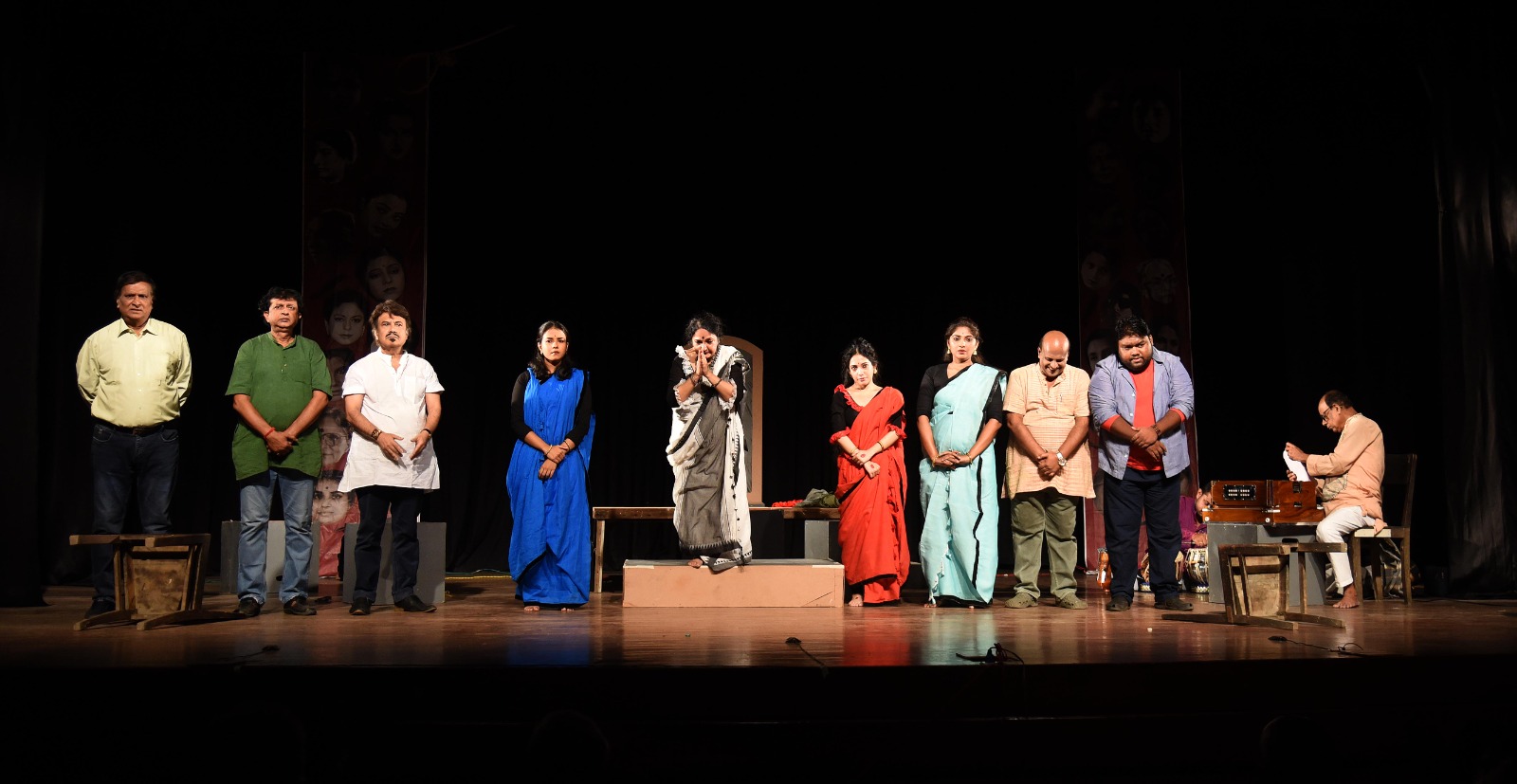
Dilip Guha Sasraya News Desk ★ New Delhi : New Delhi Kalibari presented a Bengali drama titled Sei Ek Binodini, produced by Natyaranga of Kolkata, on 18th September 2026 at the capital’s LTG auditorium.
Established in 1972, Natyaranga is a prominent Bengali theatre group led by founder-director Swapan Sengupta. Over the years, it has staged several acclaimed productions, including Bithan, Atmakatha, Sirajdaulla, Shah Jahan, Agantuk, Ghare Baire, Binodini Katha and Shri Madhusudan. The group has collaborated with celebrated theatre personalities, including Tapas Sen, Bibhas Chakraborty, Gautam Halder and Debshankar Halder. Its production Atmakatha was recognised as the Best Production of 1999 by the West Bengal Natya Akademi. Known for exploring history and the lives of eminent personalities through theatre, Natyarang has now presented Sei Ek Binodini, based on extensive research into previously undocumented episodes from the final phase of legendary actress Noti Binodini’s life.
Also Read : Teej Festival Organized at Dilli Haat INA and Pitampura
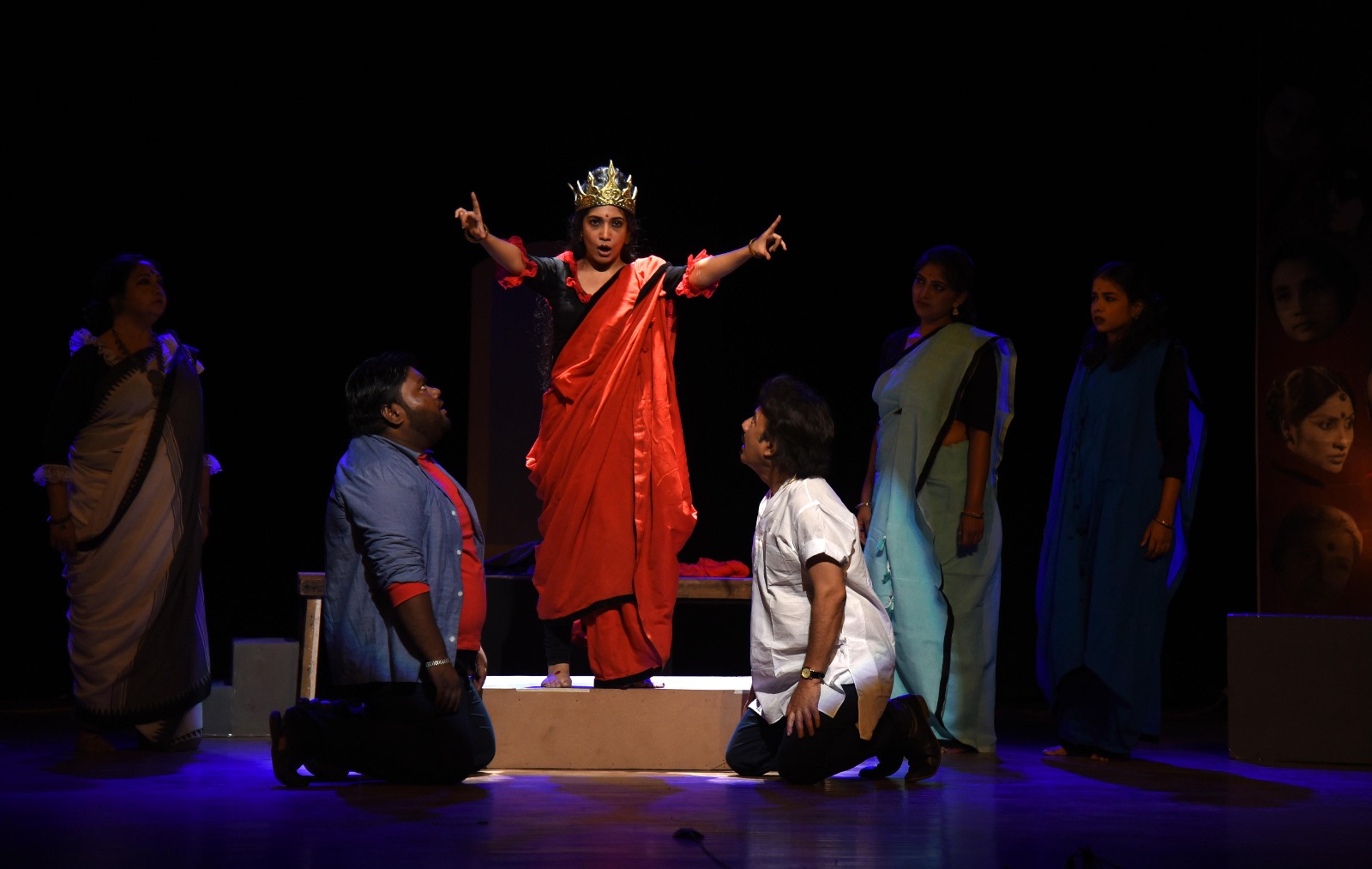
The play, written by Surajit Banerjee and directed by Anindita Banerjee, Natyaranga’s latest production, ‘Sei Ek Binodini ‘, is not just another retelling of the legendary actress Binodini Dasi’s life. It is a metatheatrical inquiry – a play within a play – where history confronts the present.
This production of Sei Ek Binodini delves into the largely undocumented final phase of the life of legendary Bengali theatre actress Noti Binodini, exploring her later years marked by solitude and old age—portraying them as a chapter no less significant than her celebrated acting career. Through a metaphorical narrative, the play attempts to revisit the emotional and personal journey of a woman whose contributions to Indian theatre have inspired numerous artistic interpretations.
The story unfolds through a surrealistic play within a play, conceived by a playwright-director who imagines Binodini returning from the realm beyond life and death. As rehearsals begin, the production encounters an unexpected crisis when the lead actress, cast as Binodini, remains unavailable due to a film shoot, while other key performers are also absent. Left with only the assistant director, music composer, two actresses and himself, the director struggles to determine how rehearsals can proceed without the central character.
The narrative takes an extraordinary turn when the real Binodini and the actress portraying her encounter each other in the rehearsal room. The arrival of another legendary theatre personality, Tarasundari, further deepens the unfolding drama, bringing to light lesser-known episodes, intriguing possibilities and reflections surrounding Binodini’s life and legacy.
This particular director’s new play, moving beyond familiar accounts of betrayal and exploitation associated with the celebrated actress, presents an imaginative exploration of how Binodini might have responded to the long-awaited renaming of Star Theatre as Binodini Theatre— which was finally a recognition of her enduring contribution to Bengali theatre.
Also Read : Dario Fo’s Satirical Spirit Came Alive on Stage with Bengali Adaptation Parchhi Na, Dichchi Na
The production also explores the complex emotional landscape of women who endured personal suffering while demonstrating remarkable strength and compassion in times of political turmoil. Through the character of Tarasundari, the play highlights the often-overlooked role of women in providing shelter and support to freedom fighters during the struggle for independence. Her portrayal reflects the courage, empathy and quiet resistance of women who, despite facing hardships of their own, extended protection to those fighting for the nation’s freedom. By weaving together emotions of pain, compassion, sacrifice, resilience and defiance, the play presents womanhood not merely through the lens of suffering, but as a powerful force capable of offering refuge, hope and solidarity in the face of oppression.
The play features a strong ensemble cast. Director Anindita Banerjee herself portrays the central character, Binodini, bringing to the stage the celebrated actress’s emotional journey in the final phase of her life. Debopriya Bandopadhyay plays Tarasundari, a role that explores the resilience, compassion and strength of women amid personal and social hardships. She also handles the production’s choreography. Chalantika Gangopadhyay appears as Khetromoni, while Kankana Basak plays Mala. Sayantan Roy Chowdhury serves as Director, with Pranab Kumar Das as Assistant Director.
Also Read : Delhi Govt to Unveil International Film Festival to Boost Film Tourism and Creative Economy
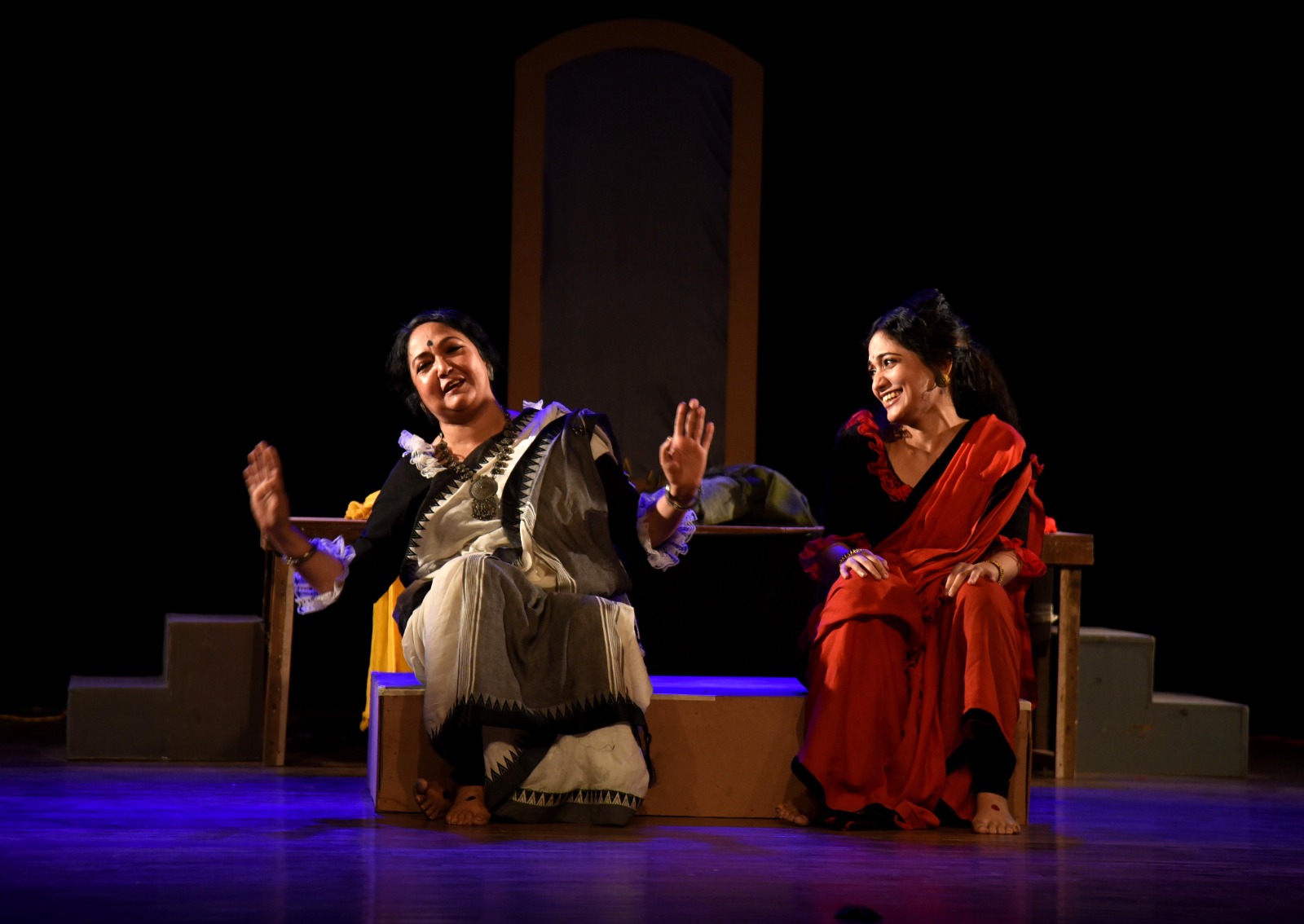
The production also features Bapi Mukherjee as Panu, Jayanta Das as Amrito, and Surajit Banerjee as Ardhendu. Bijoy Ghosh portrays freedom fighter Khudiram Bose, adding a historical dimension to the narrative and highlighting the women who offered support and shelter to freedom fighters.
Behind the performance, Subir Sanyal was the singer and music director, supported by Soudeep Chakraborty on hand drums and Keeona Mandal on violin. Bilu Dutta was responsible for the stage, while Dipankar Dey handled lighting and Samar Parui manages the lighting. Aloke Debnath was the make-up artist. Together, the cast and creative team bring alive the play’s movement between past and present, combining acting, music, dance and visual elements to explore the lives and struggles of women in theatre.
Director’s Note: Bridging Past and Present Through the Lives of Actresses
The director Anindita Banerjee said the idea of staging Sei Ek Binodini gained momentum after she read the play, written by renowned playwright and actor Surajit Bandyopadhyay, multiple times. Initially conceived around the unpublished final chapter of Noti Binodini’s life and structured as “Theatre Behind the Theatre,” the play gradually revealed a deeper exploration of the inner realities and struggles of actresses across generations.
“When I read the play again and again, I realised that it was not written only to talk about Binodini’s last days. Its purpose was also to depict the inner truth of actresses’ lives—from Tarasundari to the actresses of today. That’s when I became truly charged,” she said.
Recalling her directorial approach, she said, “The very first thing that came to my mind was to break Time and Space.” She explained that he envisioned a theatrical world where stage design, lighting and actors’ movements could transcend temporal boundaries, allowing the audience to move seamlessly between the past and the present.
According to the director, the play’s exploration of Binodini’s final years and Tarasundari’s early life also draws attention to the social deprivation faced by actresses—an issue that continues to resonate in contemporary society.
“I wanted the audience to understand that although the play is based on Binodini’s last days and Tarasundari’s early life, it is also speaking about the social deprivation of actresses, which still exists today,” she noted.
Also Read : New Hope and Light: Commemorating 163 Years of Swami Vivekananda at Vivek Utsav 2026 in Delhi
She added that dance, music and acting were woven together to create a bridge between historical experiences and present-day realities, connecting the emotional journeys of women performers across generations.
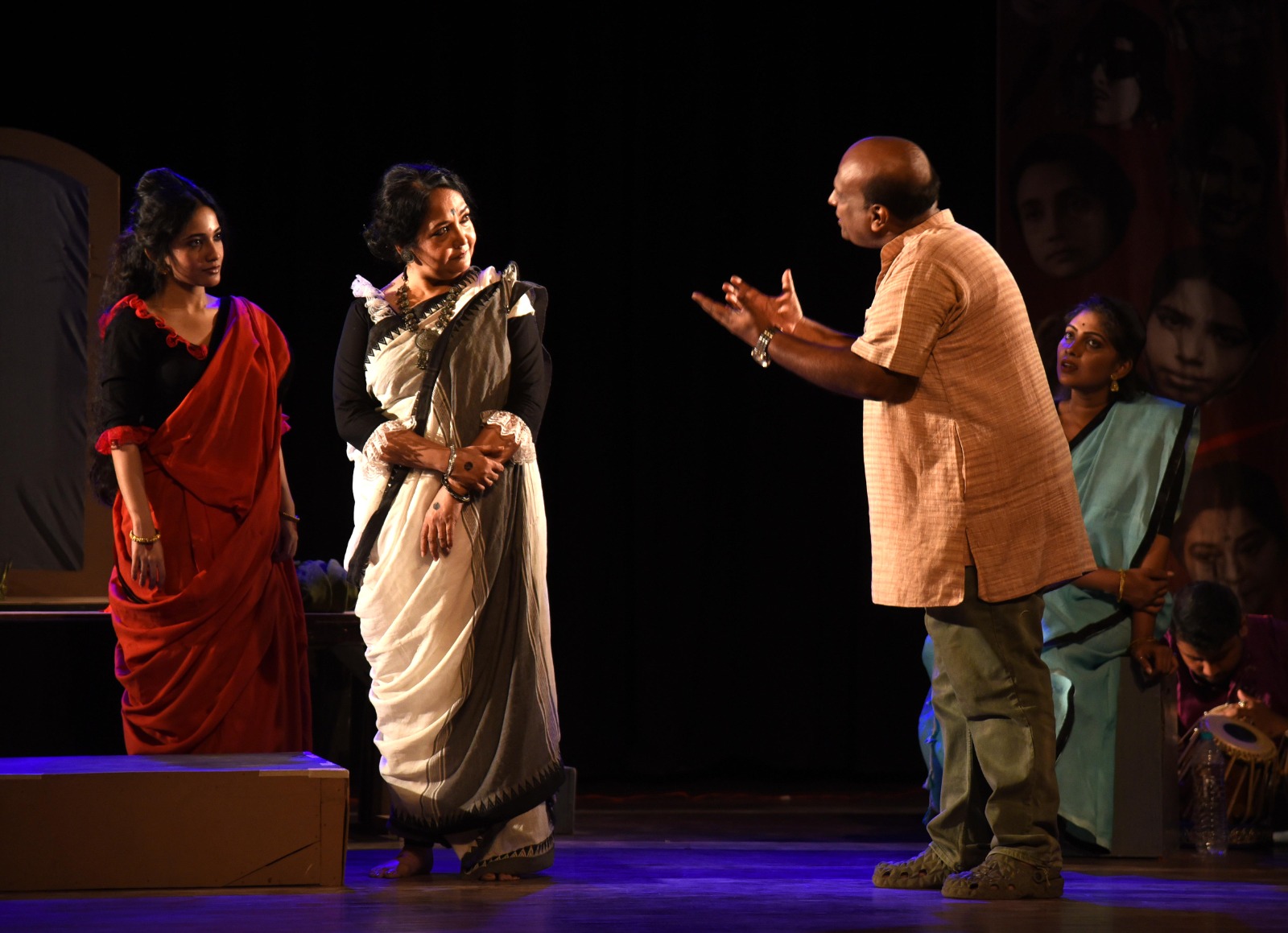
The production stands out for its bold structure.
Instead of portraying Binodini directly, it brings in Tarasundari and the contemporary actress who plays her, a dual role handled with remarkable maturity by Debopriya Bandopadhyay.
A postgraduate in English and Linguistics from Calcutta University, Debopriya is no newcomer. With over 20 years in theatre since her debut at age seven in Natyaranga’s ‘Shah Jahan’ (2004), her journey through plays like ‘Siraj-Ud-Daula’, ‘Shri Madhusudan’, ‘Moddhyo Raater Chupkatha’ and films like ‘Virgin?’ [Best Actress, Bongo Chitra Festival] has led her to what she calls the pinnacle of her career so far.
What elevates her performance is not just technical brilliance but an intensely personal connection.
In a conversation after the show, she said: “I am indebted to this role not just as an actress but as a woman. In a world where the length of her skirt still becomes the sole parameter to conclude her character, where an actress charging equal remuneration as her male counterparts is still questioned, ‘Shei Ek Binodini!’ made me think and rethink my reality.”
Her Tarasundari is vulnerable yet defiant, historic yet contemporary. The white, black, and grey shades of the character come alive because Debopriya discovers something new in it after every show.
“This role taught me what Rudyard Kipling wrote: If you can make one heap of all your winnings and risk it on one turn of pitch-and-toss, and lose and start again at your beginnings and never breathe a word about your loss. That is what Tarasundari taught me,”_ she adds.
Directed with precision and supported by a strong ensemble, ‘Sei Ek Binodini’ succeeds because it doesn’t idolise Binodini. It questions why we still need a Binodini today.
She gave half credit to the audience and the other half entirely to the playwright, the director, the president of Natyaranga, and the whole team of Sei Ek Binodini”
A must-watch for those who believe theatre is not just about telling a story, but about unlearning, relearning, and confronting our own delusions.
Audience Applauds ‘Sei Ek Binodini’ for Its Emotional Depth and Contemporary Relevance
The staging of Sei Ek Binodini received appreciation from audiences for its compelling performances, sensitive portrayal of women and fresh interpretation of legendary actress Noti Binodini’s life.
One audience member said the production offered a new perspective on Binodini by presenting her not merely as a victim of betrayal, but as a woman with pride, self-respect and a strong sense of her identity as an artist. “I was deeply moved after watching Sei Ek Binodini. During a rehearsal of a play on Tarasundari, the deceased Binodini suddenly appears, allowing herself to tell her own story,” the viewer said.
The audience member also appreciated the play’s exploration of Binodini’s possible political connections with revolutionaries, describing it as an intriguing dimension of her story. The performances, particularly Debapriya Bandyopadhyay’s transformation between characters, were praised for their emotional impact. “Sei Ek Binodini is both historically engaging and strikingly contemporary,” the viewer added.
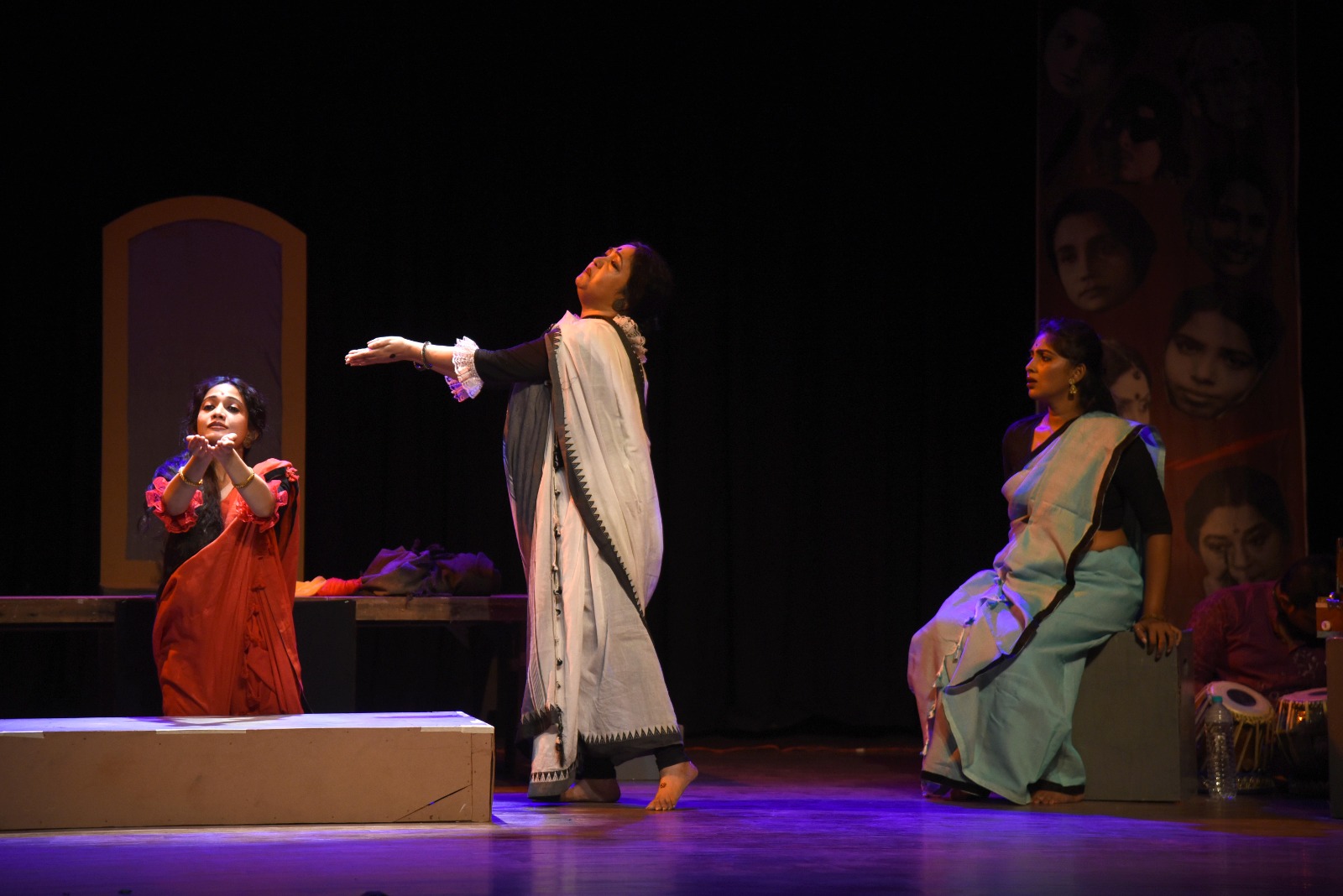
Another audience member observed that the play’s feminist perspective remained engaging without becoming didactic. “What impressed me most about Sei Ek Binodini is that its feminism never becomes a lecture. The play brings Binodini back not merely as a tragic figure from history, but as a woman with pride, self-respect, artistic identity and a voice of her own,” the viewer said.
Highlighting the production’s broader social concerns, the audience member noted that through the lives of Binodini and Tarasundari, the play examined how society benefited from women’s talent and labour while denying them dignity and recognition. The viewer also praised Surajit Bandyopadhyay’s writing for connecting the past with the present, Anindita Bandyopadhyay’s direction for keeping the historical narrative theatrical and engaging, and Debapriya Bandyopadhyay’s performances for their depth.
“The stage has changed and times have changed—but has our gaze towards women performers changed enough?” the viewer asked, underlining the contemporary relevance of the production’s central theme.
PHOTO COURTESY: Veteran Photo Journalist, Delhi, Shanker Chakravarty
Also Read : Doordarshan Marks 67th Foundation Day, Looks to the Future