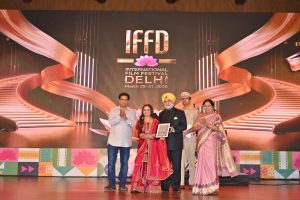
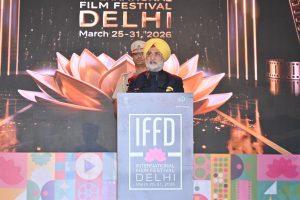
Dilip Guha, Sasraya News ★ New Delhi, 30 March 2026: Day five of the International Film Festival of Delhi rose to a defining crescendo with a grand ‘Night of Honours’ at Bharat Mandapam, where cinema, culture, and celebration converged in a single, expansive moment. The evening carried a distinct sense of occasion, underscored by the presence of Lieutenant Governor Taranjit Singh Sandhu, Chief Minister Rekha Gupta, Tourism Minister Kapil Mishra, DTTDC MD & CEO Suneel Anchipaka, and festival director Rakeysh Omprakash Mehra—a gathering that reflected both the scale and intent of a festival steadily shaping the capital’s cultural narrative. Organised by the Delhi Tourism & Transport Development Corporation in association with the Government of Delhi, the city-wide festival showcased Indian and international cinema while making film culture accessible across audiences, with its week-long programme of screenings, conversations, and industry engagements drawing filmmakers and cinephiles from around the world.
Also Read : IFFD 2026 Draws Crowds, Star Power and Engaging Conversations
The ceremony opened with Vande Mataram and the national anthem, followed by the traditional lamp lighting and formal addresses, setting a tone that balanced heritage with celebration. Actor Anupam Kher delivered a moving, poetic tribute to cinema that held the audience in rare stillness, while a stirring musical segment by Ricky Kej elevated the atmosphere into a powerful crescendo. Honours presented through the evening reflected the breadth of contemporary cinema: Mehra and preview committee chair Sunit Tandon were felicitated, alongside a special acknowledgement of the delegation from the Singapore International Film Festival. International presence was marked by Spanish actor Enrique Arce, while a tribute celebrating 50 years of Sholay honoured veteran filmmaker Ramesh Sippy for his enduring contribution to Indian cinema.
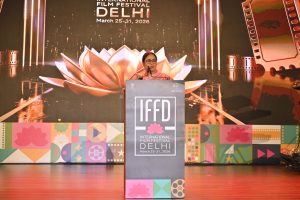
The evening also spotlighted new storytelling frontiers through an AI Filmmaking Hackathon, recognising emerging creators and showcasing the winning film. Under the “Capital’s Pride” segment, producer Guneet Monga, industry veteran T. P. Aggarwal, and actor Divya Dutta were honoured, while Bhumi Pednekar was recognised as “Actor with a Mission” for her work with the United Nations Development Programme. Across categories, awards acknowledged cinematic excellence in storytelling, performance, and direction, spanning both established names and emerging voices. Notable recognitions included Saiyaara as Pathbreaking Film of the Year, Sitaare Zameen Par as Most Inspiring Film, and Tanvi The Great, which earned honours for Best Direction for Anupam Kher and Debut Actor for Shubhangi Dutt. Dhurandhar was recognised under PVR Best of 2025, with Ranveer Singh named Best Actor and Aditya Dhar as Best Director, while Dimple Dugar was acknowledged for her contribution to preserving history through cinema.

Beyond the ceremony, the festival’s intellectual and creative energy remained palpable through the day, with packed sessions and engaged audiences. A masterclass on women actors in OTT, led by Divya Dutta alongside Shriya Pilgaonkar and Shweta Basu Prasad, explored the growing shift toward layered and authentic female representation in digital storytelling. Anupam Kher’s own masterclass evolved into an immersive and interactive session, blending craft with personal reflection as he drew from decades of experience across more than 500 films, emphasising discipline, observation and emotional truth. Actor Bhumi Pednekar, in a candid session moderated by Sonal Kalra, reflected on resilience, her unconventional journey in cinema, and the responsibility of audiences in sustaining meaningful storytelling.

The day’s screenings further underscored the festival’s diversity and reach, with packed auditoriums at Bharat Mandapam hosting films across languages and regions. Marathi film Ahilya: Zunj Ekaki drew attention for its portrayal of resilience, while Nene Raju Nene Mantri, featuring Kajal Aggarwal, brought political drama into focus. Bhojpuri cinema, led by Akshara Singh, connected strongly with audiences, and Maa Jaye, starring Jimmy Shergill, explored themes of partition and identity. Screenings of Sholay continued to draw crowds, reaffirming its timeless appeal, while a special invite-only screening of Dhurandhar 2 at Chanakya Cinema extended the festival’s buzz beyond its main venue.

What lingered by the close of the day was not merely the scale of programming, but its openness—audiences experienced stories across languages without barriers, engaged in conversations that moved beyond the surface, and became part of a festival that felt inclusive and deeply connected. As the International Film Festival of Delhi moved into its final day on March 31, its closing lineup promised a culmination of this momentum, with screenings across venues and conversations led by Guneet Monga, Singapore filmmaker Tan Siyou, and a special dialogue between Rakeysh Omprakash Mehra and Imtiaz Ali. With anticipation building toward the closing film Amoeba, the festival entered its final chapter, poised for one last surge of cinematic energy—bringing together its defining moments and leaving behind a lasting cultural imprint on the city.
Also Read : Priyanka Mohan Walks the Red Carpet at IFFD 2026; Made In Korea Garners Global Acclaim
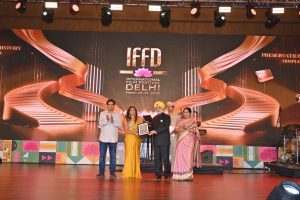
On the occasion, Chief Minister Rekha Gupta said, “Delhi is the heart of the country, a city that embraces everyone and carries both history and hope. With this film festival, we are not just hosting an event but shaping a new cultural identity for the capital. Cinema has the power to inspire, to connect, and to tell stories that become people’s dreams. This festival will be a platform for new artists, filmmakers and especially women to showcase their talent.” Tourism Minister Kapil Mishra added, “IFFD was first envisioned during the budget discussions last year and was realised under the leadership of the Chief Minister. We are committed to establishing Delhi not just as a political capital but as a cultural capital of India, positioning the city as a preferred global destination for tourism and film shooting.” The Lieutenant Governor, Taranjit Singh Sandhu, said, “This festival represented the evolving cultural identity of Delhi, bringing together artists, storytellers, and audiences from across the country and beyond, strengthening the city’s position as a vibrant centre for creative expression.”
Festival Director Rakeysh Omprakash Mehra noted, “A festival like IFFD is not just about films; it is about the conversations they spark and the emotions they leave behind. Seeing audiences show up in such strength reaffirms that cinema continues to be a shared, living experience.”
Also Read : From Silent Era to Modern Times: IFFD Exhibition Celebrates Indian Cinema