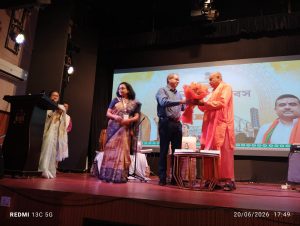
Dilip Guha, New Delhi : The inauguration of the 12th Bengal Mango Mela & Handloom-Handicrafts Expo 2026 on 20 June at Chittaranjan Park, Bangiya Samaj, New Delhi, held special significance as it coincided with Paschim Banga Divas (West Bengal Foundation Day), commemorating the formation of the state of West Bengal in independent India. Organized by the Government of West Bengal, the flagship event celebrated the state’s horticultural treasures alongside its rich handloom and handicraft traditions.
Also Read : New Hope and Light: Commemorating 163 Years of Swami Vivekananda at Vivek Utsav 2026 in Delhi
Paschim Banga Divas marks a defining moment in the history of Bengal. It has evolved into an occasion to showcase the state’s diverse heritage, achievements, and developmental aspirations. It highlights Bengal’s unique synthesis of tradition and modernity, celebrating its rich cultural practices, linguistic heritage, folk traditions, handicrafts, textiles, cuisine, and agricultural wealth.
The observance of the foundation day through the Bengal Mango Mela & Handloom-Handicrafts Expo in New Delhi reflected this broader vision. The event brought together two of the state’s greatest strengths—its world-renowned horticultural produce and its rich artisanal traditions. Bengal’s celebrated mango varieties, cultivated across districts such as Malda, Murshidabad, Nadia, and North 24 Parganas, represent a centuries-old agricultural heritage and contribute significantly to the state’s rural economy.
Alongside the mango exhibition, the Handloom and Handicrafts Expo highlighted the extraordinary craftsmanship of Bengal’s weavers and artisans. Traditional handloom products, including Baluchari, Jamdani, Tangail, and other indigenous textile traditions, as well as a wide range of handicrafts, demonstrated the creativity and skill that have made Bengal’s artisan communities internationally renowned.
Holding the event in the national capital carried special significance. It provided an opportunity for the Bengali diaspora and the wider public to engage with the cultural richness of West Bengal while strengthening the bonds between Bengal and the rest of India. The participation of members of the Bengali community from across Delhi-NCR reinforced the role of Paschim Banga Divas as a celebration of identity, heritage, and collective pride.
The inauguration ceremony was attended by Swami Sarvalokananda, Secretary of the Ramakrishna Mission, New Delhi, as the Chief Guest, along with Sri Dushyant Nariala, IAS, Principal Resident Commissioner, Government of West Bengal, and other distinguished guests. Swamiji’s presence underscored the significance of the occasion and reflected the values often associated with Bengal’s spiritual and intellectual traditions, particularly the ideals of Sri Ramakrishna, Holy Mother Sri Sarada Devi, and Swami Vivekananda.
A major attraction of the festival was the grand showcase of Bengal’s famed mangoes, with participation from six leading mango-producing districts—Malda, Murshidabad, Nadia, Hooghly, Bankura, and North 24 Parganas. Visitors were treated to an impressive display of GI-tagged varieties such as Himsagar, Lakshmanbhog, and Fazli, alongside a diverse collection of premium and exotic mangoes, including Langra, Amrapali, Mallika, Ranibhog, Begompasand, Rakhalbhog, Kanthali Dophola, Red Palmar, Banana Mango, Miyazaki, Changmai, and Red Ivory. The mela offered a unique opportunity for residents of the national capital to experience the remarkable diversity and quality of Bengal’s horticultural produce.
Reflecting the state’s integrated approach to rural development and cultural promotion, nine departments of the Government of West Bengal participated in the expo, including Food Processing Industries & Horticulture, MSME & Textiles, Tourism, Tribal Development, and Panchayats & Rural Development. Together, they showcased Bengal’s strengths in agriculture, enterprise, tourism, and traditional craftsmanship.
The Handloom and Handicrafts Expo featured around 60 artisans and weavers from different parts of the state, presenting an extensive range of handwoven textiles, traditional handicrafts, tribal art forms, and GI-tagged products. The exhibition brought together National, State, and District Award-winning craftspeople, highlighting the exceptional skill, creativity, and cultural legacy that continue to define Bengal’s artisanal traditions. The event served not only as a marketplace but also as a vibrant platform for promoting rural livelihoods, preserving traditional knowledge, and strengthening cultural connections between West Bengal and the Bengali diaspora in the national capital.
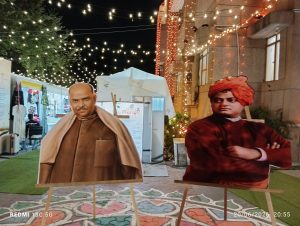
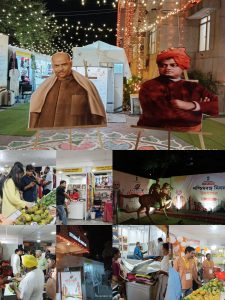
An Exclusive Food zone comprises a Wide range of mango-based special Bengali cuisine, Delightful Mango savoury items, bakeries, pickles, and other delicacies created at the mela—natural organic mango eateries from “Sundarini Naturals” from SOUTH 24 PARGANAS.
Traditional Bengali food stalls added flavour to the experience, while a cultural calendar featuring performances by artists from West Bengal and Delhi was announced for
Apart from the Exhibition of GI Tagged Products and Food zone, etc., the festival will witness a cultural extravaganza for the audience to be mesmerized with musical and dance programs on the evenings of 28 June and 5 July 2026, which will be held
The Bengal Tourism Pavilion offered visitors a glimpse into the state’s heritage destinations, spiritual circuits, nature trails, cultural attractions, and rural tourism opportunities.
Strategically hosted at Chittaranjan Park — home to one of the largest Bengali communities outside West Bengal — the festival aims to strengthen engagement with the diaspora and promote Brand Bengal across agriculture, culture, tourism, textiles, and rural enterprise.
Also Read : Kalpataru Day Observed with Spiritual Fervour at Noida Kalibari for the First Time
Welcoming the distinguished guests and participants, Principal Resident Commissioner and Additional Chief Secretary, Government of West Bengal, Shri Dushyant Nariala, I.A.S., extended a warm greeting to Swami Sarvalokananda, Secretary of the Ramakrishna Mission, New Delhi, and the monks of the Mission.
“I extend a heartfelt welcome to Swami Sarvalokanandaji Maharaj, the revered monks of the Ramakrishna Mission, members of my team, representatives of the Mango Growers’ Associations from Malda and Murshidabad, artisans, national award-winning craftsmen, and all those who have travelled from West Bengal to be part of this celebration,” he said.
He also welcomed the residents of Chittaranjan Park, participants, visitors, and members of the media, expressing gratitude for their enthusiastic presence.
Describing the occasion as particularly significant, Shri Nariala said, “Today, June 20, 2026, is a special day as we celebrate the Foundation Day of West Bengal. A major state-level programme is being held in Kolkata, and we are delighted that the inauguration of the Mango Festival is coinciding with these celebrations here in New Delhi.”
Announcing the commencement of the festival, he said the event would continue for the next fifteen days and invited people to participate actively. “I request everyone to visit the festival and support our growers, artisans, and traditional stakeholders whose livelihoods and heritage are closely linked to this celebration,” he remarked.
Referring to the historical significance of the day, Shri Nariala noted that the audience would also have the opportunity to learn more about the Foundation Day and the rich history and cultural legacy of West Bengal from Swami Sarvalokanandaji Maharaj.
Highlighting the growing popularity of the festival, he said, “The Mango Festival has been successfully organised for many years and has now evolved into a recognised brand. Just a few days ago, during a meeting, several participants from Bengal eagerly spoke about the upcoming festival and were looking forward to it. I am happy that the wait is finally over.”
“The festival has become a major event on Delhi’s cultural calendar, bringing together growers, consumers, and admirers of Bengal’s world-famous mangoes while showcasing the state’s rich agricultural and cultural heritage,” he added.
Speaking at the occasion, Swami Sarvalokananda expressed his delight at participating in the festival, calling it “a matter of great joy and pride.” He highlighted Bengal’s unmatched legacy in mango cultivation, noting that “West Bengal is truly the land of mangoes — especially Malda and Murshidabad. Many people don’t even know that so many varieties of mangoes are found in West Bengal, India.” Stressing the need for greater visibility, he remarked, “What is needed in this hour is branding and marketing. Other states have strong promotion and advertisements, but the quality of Bengal’s mangoes is far, far superior.”
The Secretary also connected the festival to the broader cultural significance of the day, reminding the audience that 20th June marks the foundation of West Bengal in 1947. “The civilization and culture of West Bengal are so ancient, so rich. In every field — civilization, culture, agriculture, industry, literature, music — the contribution of West Bengal is unforgettable,” he said, invoking the legacy of luminaries such as Raja Ram Mohan Roy, Ishwar Chandra Vidyasagar, Rabindranath Tagore, Bankim Chandra Chattopadhyay, Sri Ramakrishna Paramhansa, and Swami Vivekananda. “In every field, West Bengal has shown the way to all of India. There is no doubt about it.”
Swami Sarvalokananda emphasized the importance of preserving Bengal’s heritage: “If India is to survive, then West Bengal’s culture must be preserved. West Bengal’s contribution to India’s civilization and culture is unforgettable.” He paid tribute to Dr. Shyama Prasad Mukherjee for his role in ensuring Bengal’s unity with India, offering his “salutations again and again” for that contribution.
In a lighter yet scientifically grounded note, he encouraged visitors to enjoy mangoes without fear, dispelling myths around diabetes. “The sugar in fruit does not cause diabetes. Eat mangoes fearlessly — but in moderation,” he advised, adding with humour, “Don’t say later that the Maharaj told you to eat 12 mangoes at once!”
The spiritual ideals of Sri Ramakrishna, Maa Sarada Devi, and Swami Vivekananda remain central to West Bengal’s vision for progress and development, said Swami Sarvalokananda, while addressing a gathering. In a significant message that linked governance, social development, and spiritual values, the senior monk said the present West Bengal government firmly believes that the state’s future resurgence must be guided by the teachings of Sri Ramakrishna and Swami Vivekananda.
“Many people may wonder why monks are associated with such programmes,” Swami Sarvalokananda said. “The reason is that the present West Bengal government believes in the ideals and philosophy of Sri Ramakrishna and Swami Vivekananda. There is a conviction that with the blessings of Sri Ramakrishna, Maa Sarada, and Swami Vivekananda, West Bengal will rise again and awaken.” He emphasized that the vision extends beyond the state itself. “Not only West Bengal, but all of India will awaken and progress through these blessings and ideals,” he said.
Referring to his participation in multiple state functions, including a recent programme at Vigyan Bhavan, the monk said the government has consistently sought spiritual blessings for initiatives aimed at public welfare and development.
Recalling a recent interaction connected with an agreement between the Centre and the West Bengal government under Ayushman Bharat, he noted that the Chief Minister had expressed the desire that major public initiatives be undertaken with the blessings of Sri Ramakrishna, Maa Sarada, and Swami Vivekananda.
“The Chief Minister wants our blessings, and the blessings of Sri Ramakrishna, Maa Sarada, and Swami Vivekananda are absolutely necessary for any auspicious work,” he recalled.
Swami Sarvalokananda explained that his presence at the programme was motivated by the belief that spiritual values and public service must go hand in hand.
“That is why I have come again—to ensure that these blessings are with us, so that West Bengal may rise, awaken and move forward,” he said.
The remarks resonated strongly with the audience, as the monk connected Bengal’s future aspirations with the legacy of the spiritual and social renaissance led by Sri Ramakrishna and Swami Vivekananda. He suggested that the state’s progress would be meaningful only when accompanied by the values of service, harmony, character-building, and social upliftment championed by the Ramakrishna-Vivekananda tradition.
Concluding his address, Swami Sarvalokananda recalled a freedom fighter’s voice: “What Bengal thinks today, India will think tomorrow.” He urged the audience to preserve Bengal’s heritage and unite in its promotion, affirming that with spiritual guidance and collective effort, Bengal’s renaissance will inspire the entire nation.
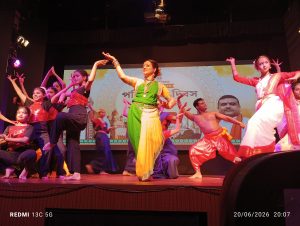
The evening was full of entertaining cultural programmes, with recitations presented by Prishila Chattaraj and a musical presentation titled Banglar Gaan, Banglar Pran by Rajarshi Deb Roy and Moumita Kundu. Both performances showcased the patriotic spirit that had inspired generations in Bengal, bringing alive songs that reflected the region’s rich cultural heritage, resilience, and contributions to India’s freedom movement. Through evocative melodies and stirring lyrics, the presentation illuminated Bengal’s enduring legacy of nationalism, social awakening, and artistic excellence. It also featured a dance drama by Srijani Dance Academy, directed by Smita Chakraborty, while Bhaswati Goswami compered the event.
Renowned Bharatanatyam exponent Smita Chakraborty, along with her talented troupe from Shinjan Academy of Performing Arts, presented the powerful dance drama Phire Esho Agun (“Return, O Fire”), a compelling artistic interpretation of resilience, awakening, and the indomitable human spirit. Under her artistic direction, the production blended the grace of Bharatanatyam with expressive theatrical storytelling, creating a captivating visual and emotional experience for the audience.
The dance drama was based on the evocative poetry of Subho Dasgupta, whose verses inspired a narrative of transformation, courage, and social consciousness. “Agun”, meaning “Fire” in Bengali, is a powerful dance drama. The production brings to the stage the life, ideals, and indomitable spirit of Bengal’s great personalities of yesteryear.
Through expressive dance, music, and poetic Narration by Dr Saswato Dawn, the drama pays tribute to iconic figures who shaped Bengal’s cultural, literary, and freedom movements. Namely, Bengal luminaries like Iswar Chandra Bidyasagar, Bankim Chandra Chattopadhyay, Rabindranath Thakur, Swami Vivekananda, Netaji Subhash Chandra Bose, Binoy Badol, and Dinesh are remembered in each act, channelling their courage, sacrifice, and vision — reminding today’s generation of the “fire” they carried within.
Through intricate choreography, expressive abhinaya, rhythmic precision, and vibrant ensemble performances, the dancers brought the poet’s vision to life on stage.
The production demonstrated the academy’s commitment to preserving classical traditions while exploring contemporary themes through the language of dance.
Phire Esho Agun emerged as a memorable cultural presentation, celebrating the power of art, poetry, and collective expression. The performance left a lasting impression on the audience, reaffirming the role of dance as a medium for reflection, inspiration, and social awakening.
As West Bengal commemorates its foundation, Paschim Banga Divas serves as a reminder of the state’s remarkable journey—from the challenges of Partition to its continuing role as a centre of culture, creativity, education, agriculture, industry, and social progress. The celebration affirms Bengal’s enduring spirit and its commitment to preserving its rich heritage while embracing the opportunities of the future.
The programme, organised on the occasion of West Bengal Foundation Day, thus became more than a cultural celebration. It emerged as a reflection on Bengal’s enduring spiritual heritage and the role that the ideals of Ramakrishna, Sarada Devi, and Vivekananda continue to play in shaping the state’s vision for the future.
Also read: Chironutan United 1,100 Voices Across India in a Grand Tribute to Tagore
Also Read : Dilip Kumar Chattopadhyay : নটসূর্য দিলীপ কুমার চট্টোপাধ্যায় প্রসঙ্গে