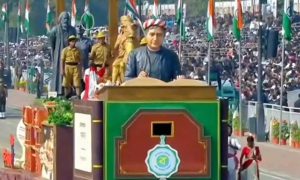
Sasraya News Desk ★ New Delhi : During the Republic Day parade in the national capital, West Bengal’s tableau showcased Bankim Chandra Chatterjee and his iconic composition, “Vande Mataram.” This tableau was created in line with the overarching theme of the 77th Republic Day Parade, which celebrates 150 years of the national song. The theme for West Bengal’s tableau was “Bengal in the Freedom Movement of India.”
The vibrant tableau featured notable figures from West Bengal, including Nobel Laureate Rabindranath Tagore and freedom fighter Khudiram Bose, who faced the gallows. “Vande Mataram,” originally composed independently and later included in the novel “Anandamath,” inspired Indians during the colonial era and motivated them to fight for their country’s liberation. It was first sung by Rabindranath Tagore at the Congress session in Calcutta (now Kolkata) in 1896.
West Bengal’s vibrant tableau at the Republic Day parade on Kartavya Path offered a powerful visual tribute to the 150th anniversary of the national song ‘Vande Mataram’, celebrating Bengal’s towering contribution to India’s freedom movement and cultural renaissance. Aligned with the 77th Republic Day theme ‘Swatantrata ka Mantra: Vande Mataram’ and ‘Samriddhi ka Mantra: Aatmanirbhar Bharat’, the tableau prominently featured Bankim Chandra Chatterjee, the composer of Vande Mataram, alongside iconic figures such as Rabindranath Tagore, Netaji Subhas Chandra Bose, Khudiram Bose, and Matangini Hazra. Through striking sculptures and relief panels, it depicted pivotal moments of colonial resistance, including scenes of repression and sacrifice, the historic Alipore Jail, and a roll call of eminent personalities from undivided Bengal—among them Ishwar Chandra Vidyasagar, Swami Vivekananda, Sri Aurobindo, Bagha Jatin, Pritilata Waddedar, and Kazi Nazrul Islam. Archival imagery referencing Anandamath, equestrian imagery of Netaji, and a musical performance based on the original 1896 rendition of Vande Mataram first sung by Tagore, together wove a stirring narrative of patriotism, resilience, and cultural pride. The tableau stood as a moving reminder of Bengal’s enduring legacy in shaping India’s march towards independence and its continuing journey of national progress and self-reliance.
(With inputs from agencies.)